
Art & Culture · New York · Daytime visits
Inside New York’s Mansion Museums
Private fortunes built some of New York’s most remarkable rooms. Today, a museum ticket can take you through the door. From Fifth Avenue mansions to a collector’s library and smaller historic homes, these are cultural outings you can plan for yourself.
A museum visit belongs on the cultural calendar as surely as an evening opening. The difference is that you can often choose your own day, buy ordinary admission and spend time with the art and architecture without waiting for an invitation. Some houses offer self-guided galleries; others protect their rooms through small guided tours. Knowing which kind of visit you are booking makes the day work.
Begin with the grand residences and collector interiors below, then look beyond the millionaire’s mansion to the homes of a photographer and a musician, and a focused neighborhood art museum. Their scales differ, but each opens a door into the city’s cultural history.
Before choosing a date
As checked October 27, Neue Galerie’s galleries are scheduled to reopen November 12. Cooper Hewitt has reduced admission while its second- and third-floor galleries are closed. Merchant’s House remains open during restoration, with a temporary entrance through Manuel Plaza. Those are different visiting situations; use the linked museum notices when choosing your day.
1109 Fifth Avenue · Upper East Side
The Jewish Museum
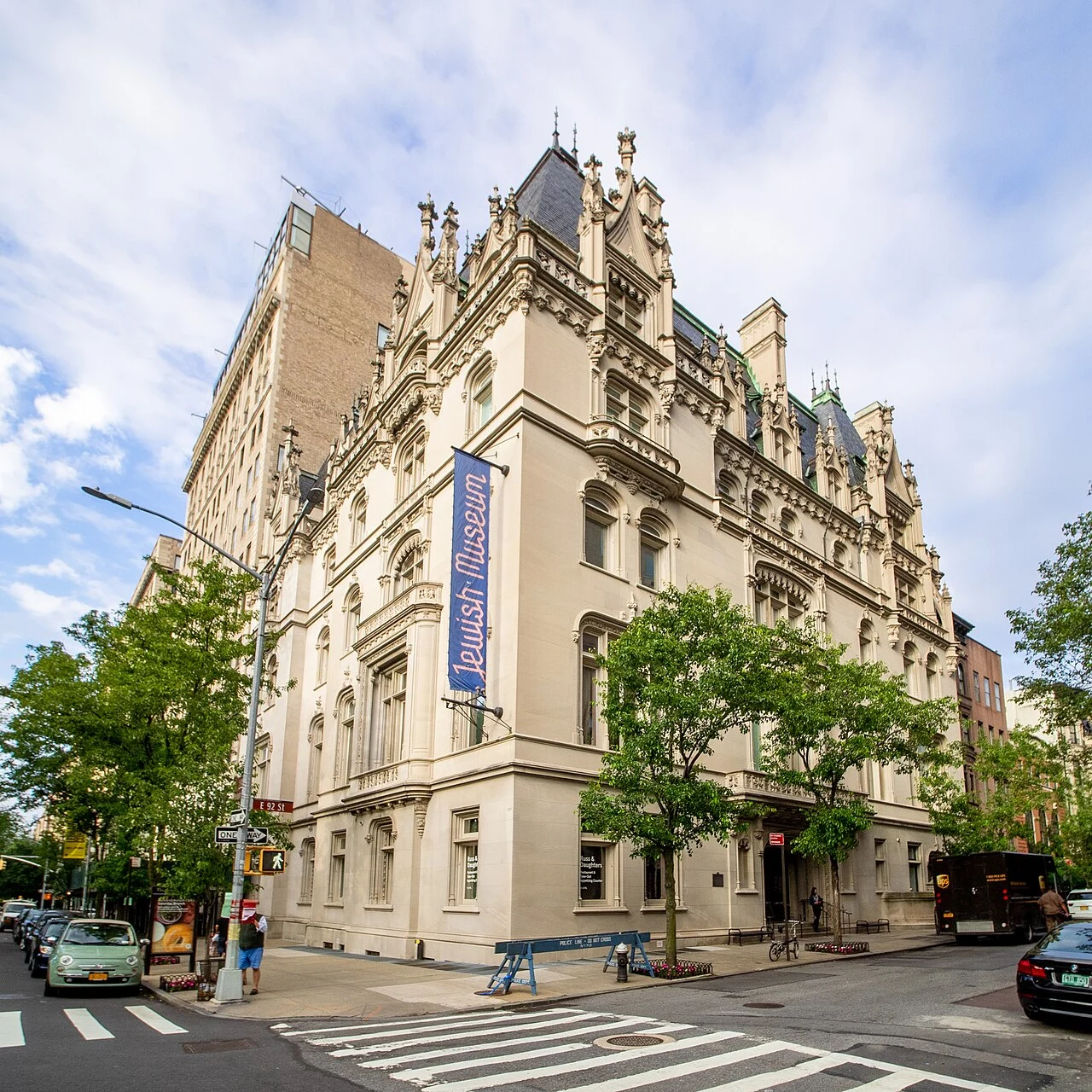
The Warburg Mansion on Museum Mile turns a former family residence into a place to explore art and Jewish culture. Its elaborate exterior gives the visit an architectural beginning before the exhibitions start.
Make this an art visit with a house story: consider how a private residence has adapted to a public collection and changing exhibitions. The museum’s program connects Jewish experience with wider questions of art, design and cultural history.
How to visit: Adult admission is $24. Saturdays are free, as are third Thursdays from 5–8 p.m. Timed tickets are available online and in the lobby.
Regular public hours are Sunday, Monday and Friday–Saturday 11 a.m.–6 p.m., Thursday 11 a.m.–8 p.m.; closed Tuesday and Wednesday. Check holiday changes.
Access: An accessible entrance is on 92nd Street, immediately to the right of the Fifth Avenue entrance; all floors are accessible.
2 East 91st Street · Upper East Side
Cooper Hewitt, Smithsonian Design Museum
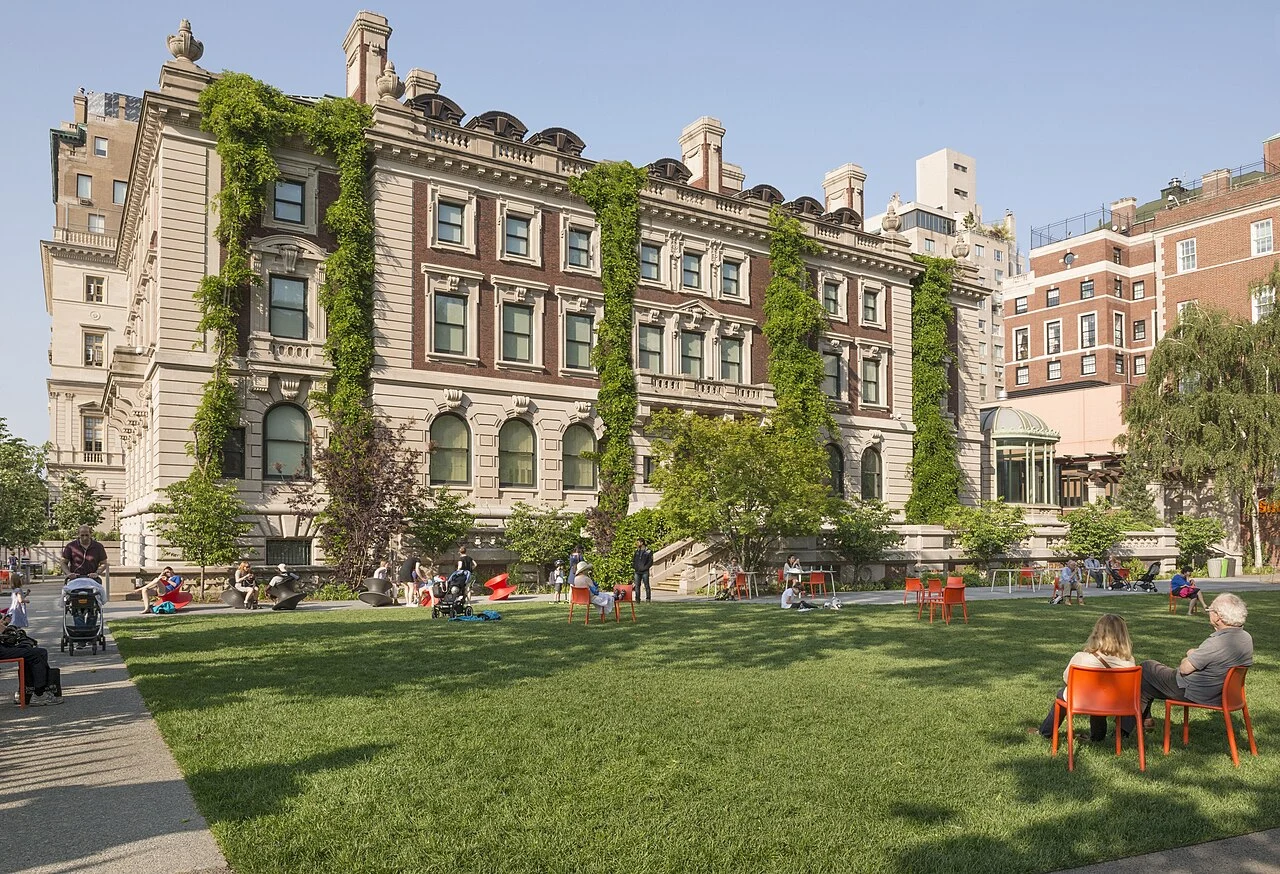
Andrew Carnegie’s former family home brings a domestic scale to the study of design. Built between 1899 and 1902, the 64-room mansion became Cooper Hewitt’s museum home in 1976.
Look at the building as well as the objects: rooms originally arranged for a household now present the choices that shape everyday design. The garden offers another reason to make the museum a daytime destination.
How to visit: Current exhibition-changeover admission is reduced to $10 for adults. The second- and third-floor galleries are temporarily closed. Pay what you wish from 5–6 p.m. daily; verify the current offer before visiting.
Museum, shop and garden: daily 10 a.m.–6 p.m., with holiday exceptions. The garden is scheduled to close November 5–7, 2026.
Access: Use the museum’s official accessibility information to plan step-free entry and available assistance.
1 East 70th Street · Upper East Side
The Frick Collection
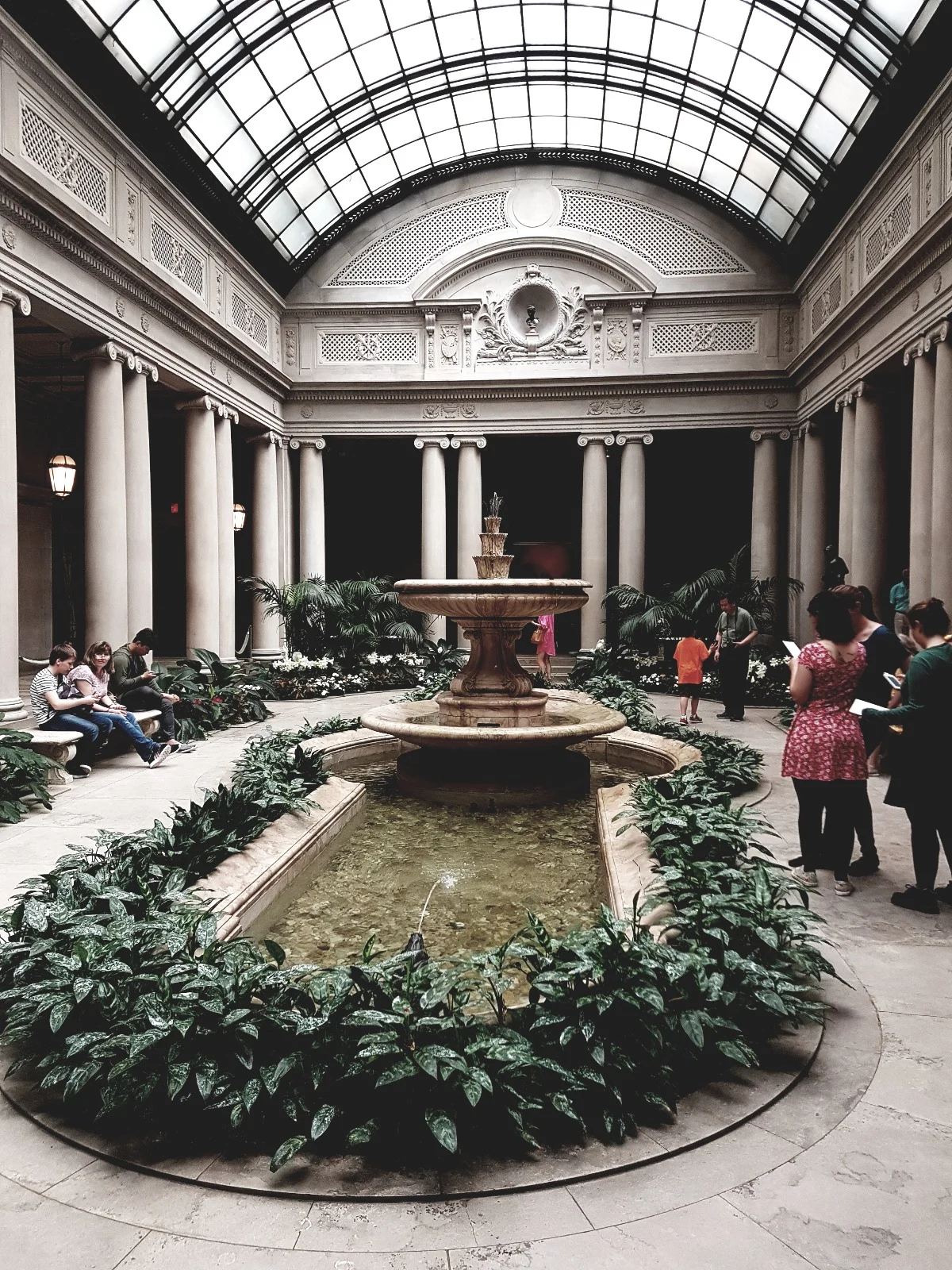
Henry Clay Frick’s Fifth Avenue residence places paintings, sculpture and decorative arts within a former private house. The relationship between the rooms and the collection makes it an essential stop for anyone interested in New York’s mansion museums.
Choose a few rooms and look closely rather than rushing through a checklist. The museum also offers short gallery talks about the house and individual works, listed in its public program.
How to visit: Adult admission is $30; reserve a timed ticket before visiting. Visitors must be at least 10 years old. Youth ages 10–18 enter free. Wednesday afternoon pay-what-you-wish admission has its own booking arrangements.
Use the current museum schedule for the day you intend to visit; special evening programs have separate times.
Access: Consult the Frick’s visitor guidelines and accessibility information before choosing a ticket or guided visit.
225 Madison Avenue · Murray Hill
The Morgan Library & Museum
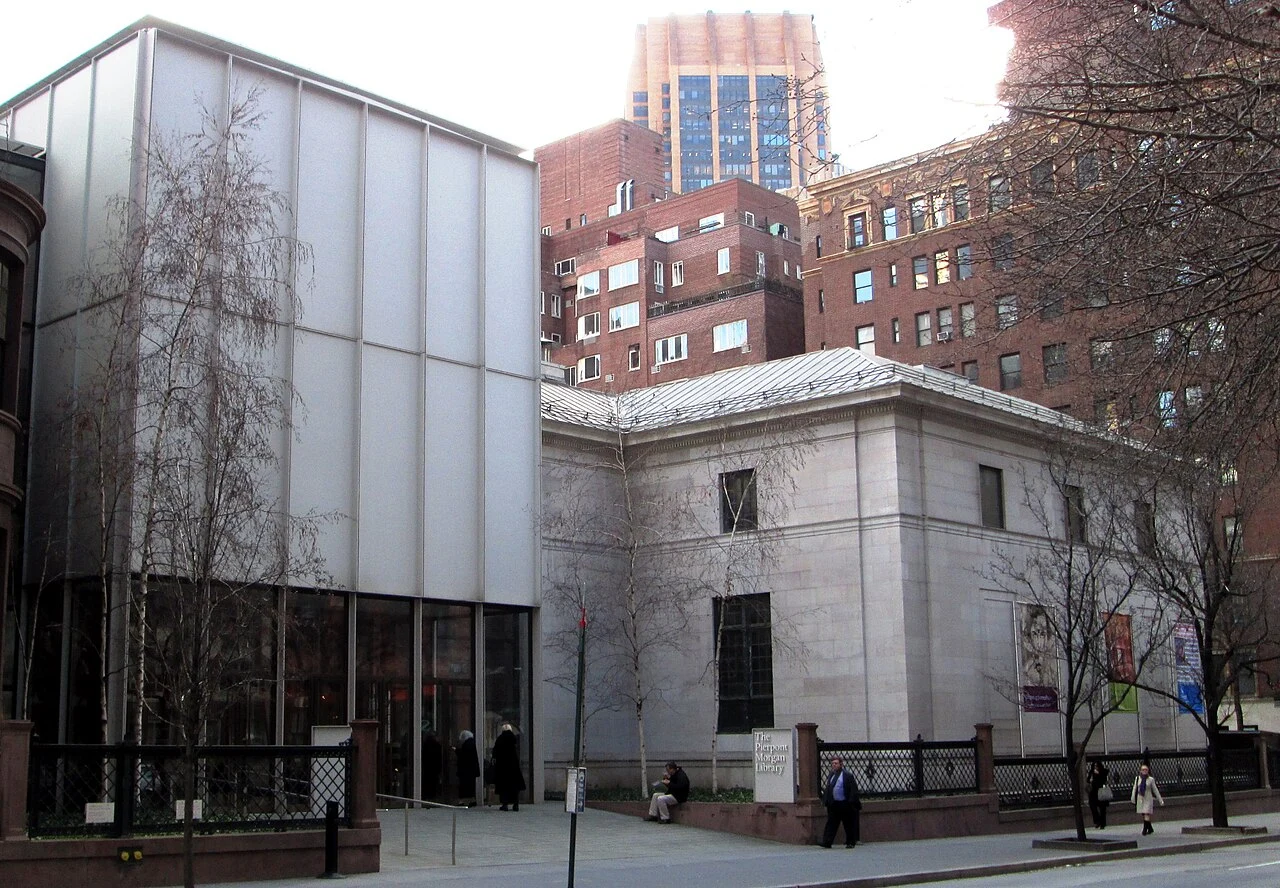
The Morgan began as Pierpont Morgan’s private library, built from 1902 to 1906 beside his residence. Charles McKim designed its Italian Renaissance-style interiors. This is a collector’s private library opened to the public, rather than simply a mansion converted into galleries.
Start with the historic library rooms, then move to the exhibitions of books, manuscripts, drawings and other works. The contrast between the private collection rooms and the later museum campus is part of the visit.
How to visit: Adult admission is $25; advance timed tickets are suggested. The historic library rooms are free Tuesday and Sunday 3–5 p.m., excluding special exhibitions. Friday 5–8 p.m. free admission requires a reservation.
Tuesday–Thursday and Saturday–Sunday 10:30 a.m.–5 p.m.; Friday until 8 p.m.; closed Monday. Holiday exceptions apply.
Access: The official visit page links to accessibility guidance and assistance.
1048 Fifth Avenue · Upper East Side
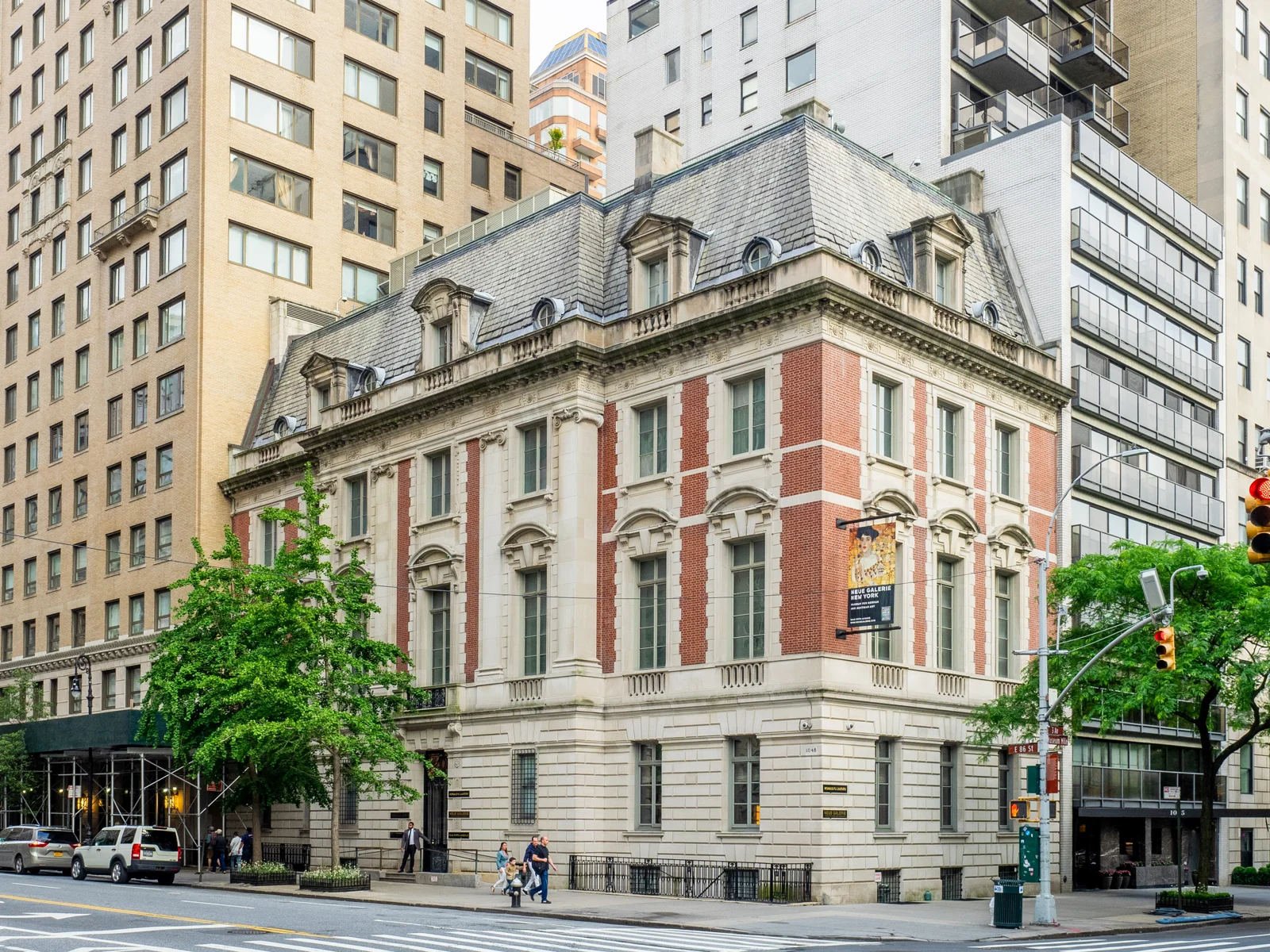
Neue Galerie New York
William Starr Miller commissioned this Fifth Avenue house, completed in 1914 by Carrère & Hastings. Later occupied by Mrs. Cornelius Vanderbilt III, it opened as Neue Galerie in 2001.
Its focus is early twentieth-century German and Austrian art and design. A smaller, concentrated collection makes this a natural choice when you want a museum visit with a distinctive architectural setting.
How to visit: Galleries are temporarily closed and scheduled to reopen November 12, 2026. Announced adult admission is $28. Children under 12 are not admitted during regular gallery hours. Café and shop access have separate schedules.
From the announced reopening: Monday and Wednesday–Sunday 10 a.m.–6 p.m.; closed Tuesday. Final gallery entry at 5:30 p.m.
Access: See the museum’s visitor policies for accessibility and age rules. Photography and recording are not permitted during regular gallery hours.
29 East 4th Street · NoHo; current entry at 35 East 4th Street
Merchant’s House Museum
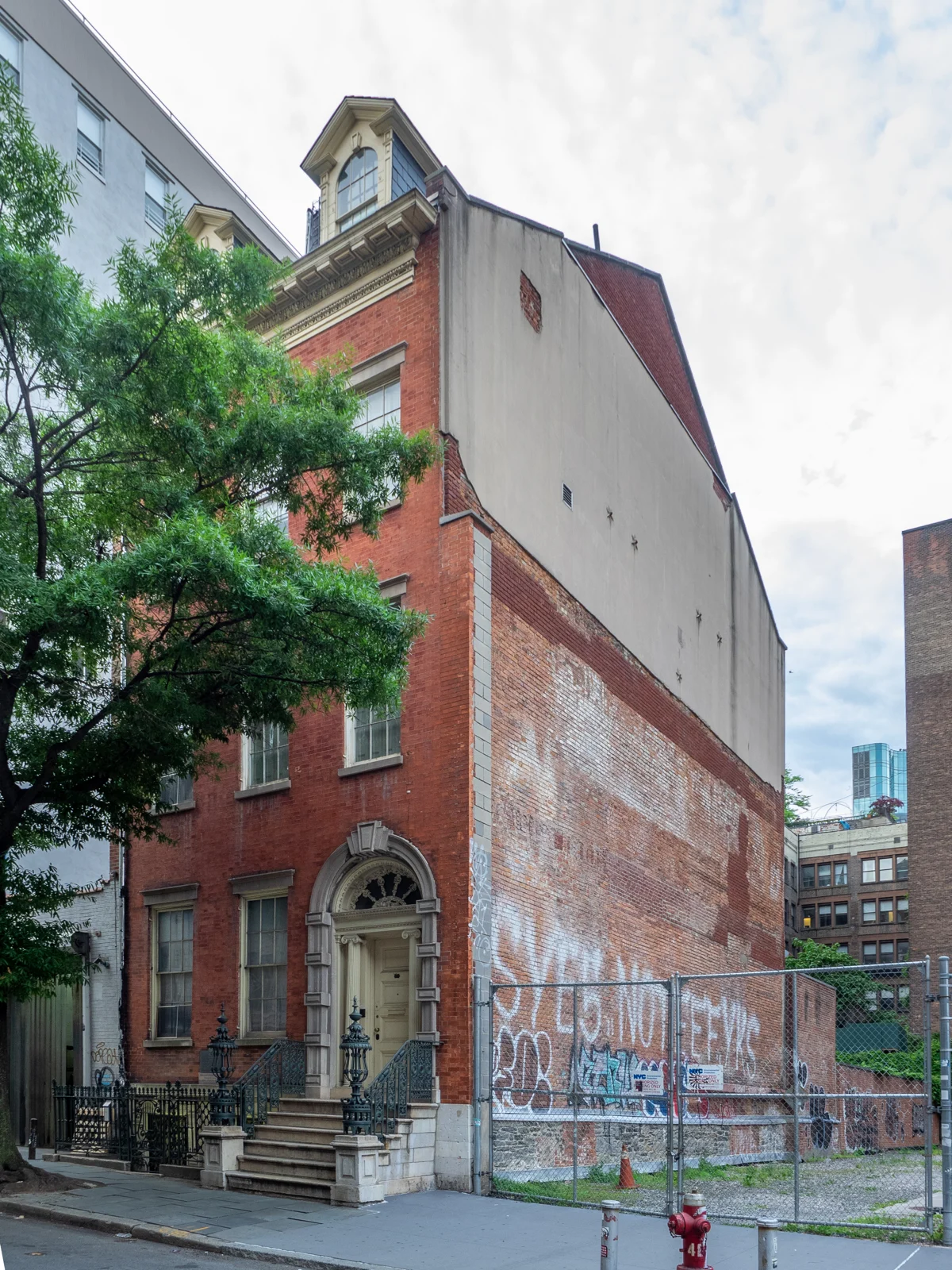
The Tredwell family’s former home preserves rooms filled with original furnishings and possessions. It offers a closer domestic view of nineteenth-century New York than a purpose-built gallery can provide.
The house includes the family rooms, service spaces and garden. Look for the contrast between the household’s formal presentation and the work required to maintain it.
How to visit: Open during restoration. Enter through Manuel Plaza, 35 East 4th Street. Self-guided adult admission is $15.50, purchased at the door; the noon guided tour is $20.50, with reservations recommended.
Wednesday–Sunday: self-guided visits 1–5 p.m., last entry 4:30 p.m. Guided tour at noon; major-holiday closures apply.
Access: The museum spans five floors accessed by stairs. Review access arrangements before visiting.
895 Shore Road · Pelham Bay Park, Bronx
Bartow-Pell Mansion Museum
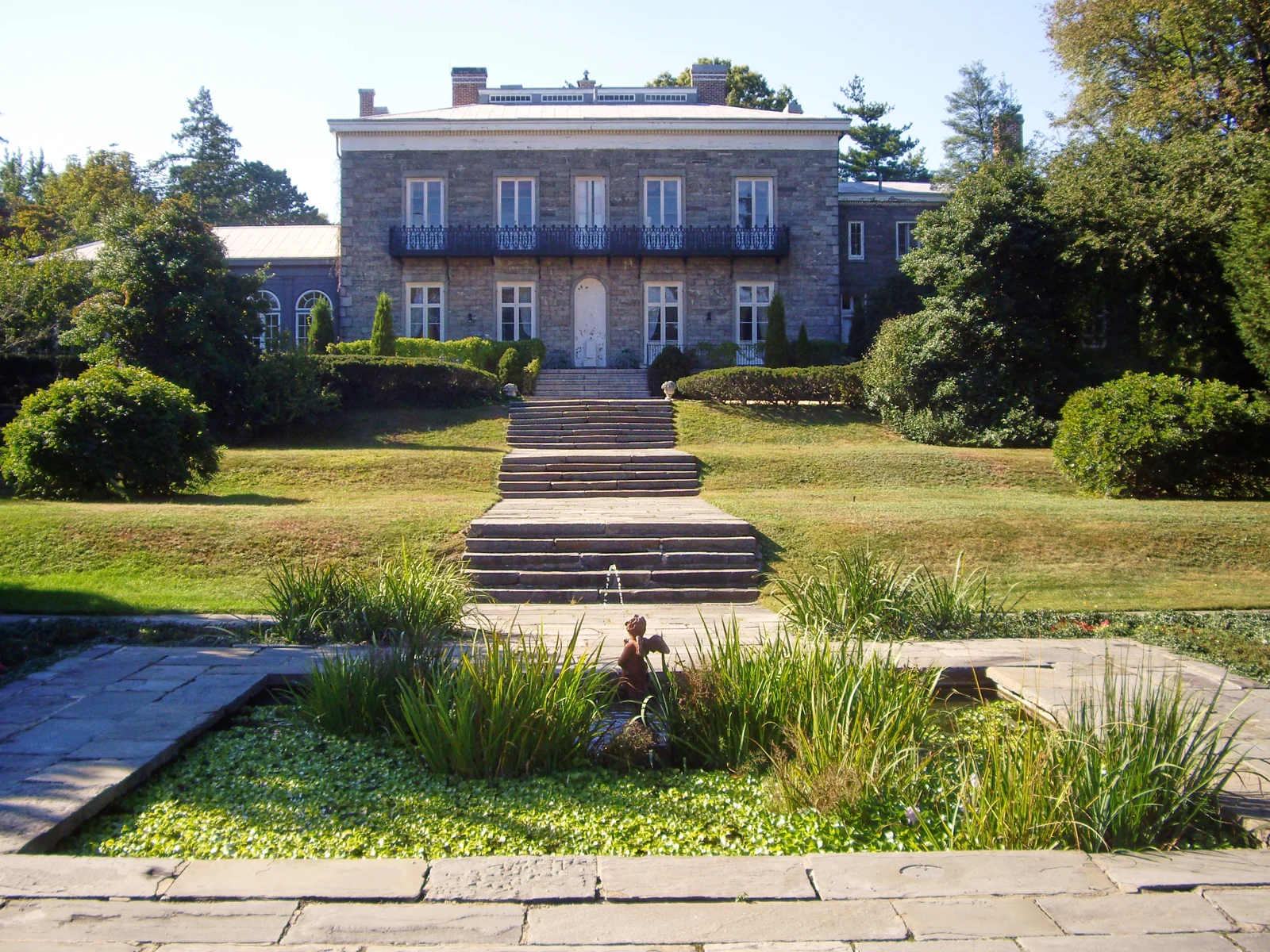
A nineteenth-century country house in Pelham Bay Park, Bartow-Pell combines a late Federal exterior with Greek Revival interiors. The formal terraced garden extends the architectural story outdoors.
A guided visit takes in the mansion and carriage house, with fine and decorative arts alongside historic furnishings. Leave time for the grounds rather than treating the house as a quick stop between Manhattan museums.
How to visit: Adult admission is $15. Walk-ins are accepted during published house hours. Guided tours begin at 12:15, 1:15, 2:15 and 3:15 p.m.
Mansion and carriage house: Wednesday, Saturday and Sunday noon–4 p.m. Grounds: daily 8:30 a.m. to dusk. Holiday closures apply.
Access: Five steps lead to the entrance, and the three-floor mansion has no elevator. Tours involve walking and standing, with limited seating.
2 Hylan Boulevard · Staten Island
Alice Austen House
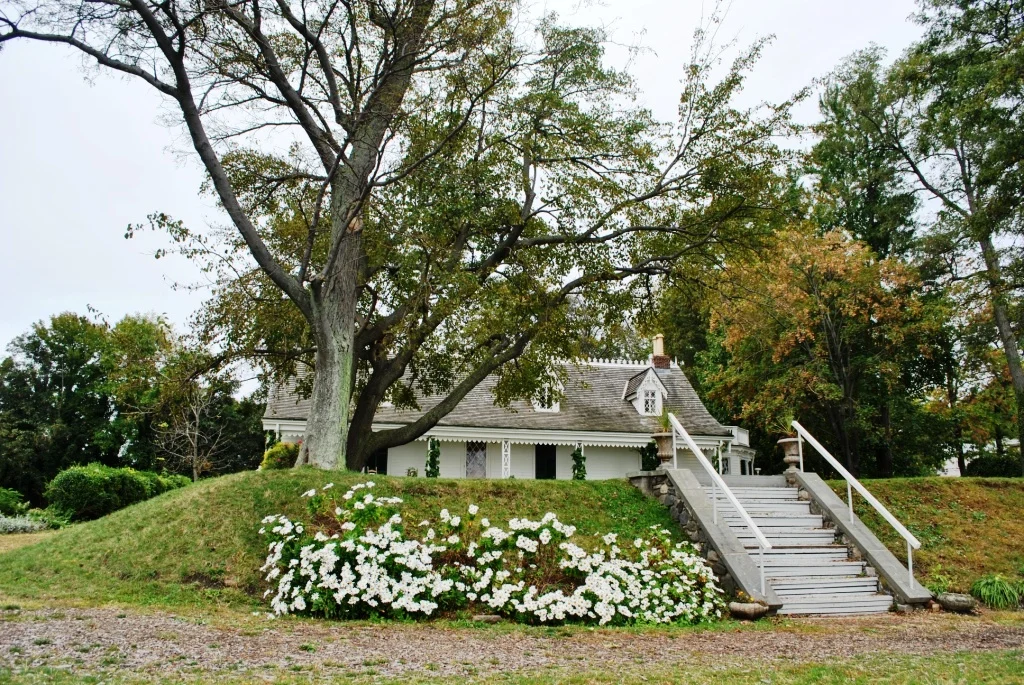
Alice Austen’s Staten Island home adds photography and a waterfront setting to the historic-house circuit. Its cottage scale broadens the story beyond the palatial residences of Fifth Avenue.
Combine the period rooms with the museum’s photographic exhibitions. The house makes a useful starting point for learning about Austen’s work and the changing visual record of New York.
How to visit: General admission is a suggested $5. Check the current exhibition and closure notices before making the trip.
Wednesday–Friday noon–5 p.m.; Saturday 11 a.m.–5 p.m.; closed Sunday–Tuesday. Announced closures include November 25–28 and December 23–January 2.
Access: A ramp entrance is at the rear of the house; public galleries and period rooms are largely on the first floor.
Begin at 34-56 107th Street · Corona, Queens
Louis Armstrong House Museum
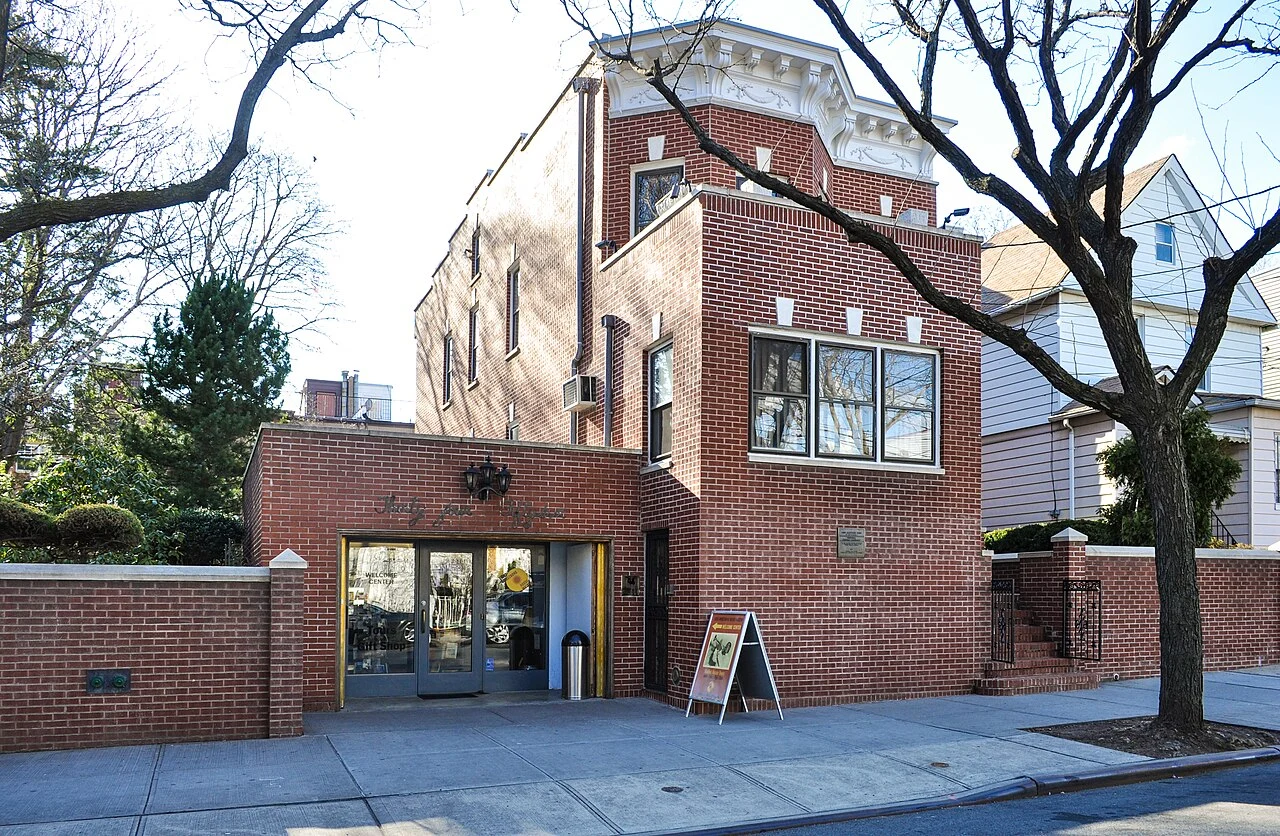
Louis and Lucille Armstrong moved into their Corona home in 1943. Preserved rooms, personal belongings and recordings connect an internationally known musician with the neighborhood and household he returned to.
The historic house is available only on a guided tour. The nearby Louis Armstrong Center adds exhibitions about his life and music. This is a modest home with an exceptional cultural story, rather than a millionaire’s mansion.
How to visit: Advance house-tour tickets are required. Adults pay $20 for the guided house tour plus exhibitions; exhibition-only admission is $10 and does not include the house.
Thursday–Saturday 11 a.m.–4 p.m. House tours run hourly 11 a.m.–3 p.m., last approximately 45 minutes and have a ten-person limit. Begin at the Center, 34-56 107th Street.
Access: The Center is wheelchair accessible. The historic home has two sets of steep stairs; a virtual house tour is available for visitors unable to take the physical tour.
319 West 107th Street · Upper West Side
Nicholas Roerich Museum
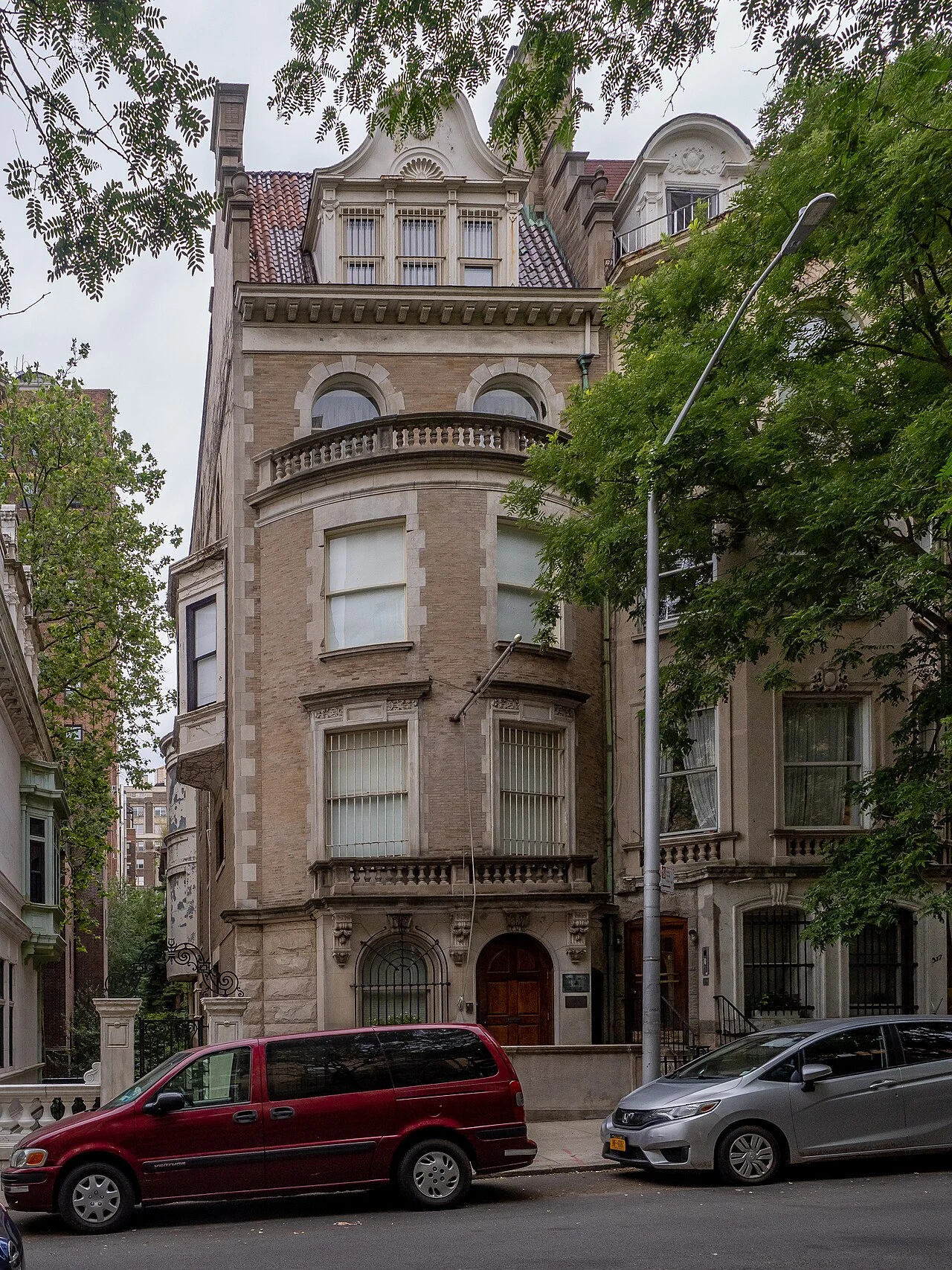
An Upper West Side museum devoted to Nicholas Roerich offers another way into the city’s smaller cultural institutions. The focus is the artist’s work and ideas, rather than an account of a millionaire household.
The museum holds approximately 200 paintings, with most on permanent display. Roerich’s subjects connect landscape, myth and spiritual inquiry; the focused collection rewards a slower visit.
How to visit: Free admission, with no tickets or reservations required. Last entry is 30 minutes before closing.
Tuesday–Friday noon–4 p.m.; Saturday–Sunday noon–5 p.m. Closed Monday and Thanksgiving Day.
Access: Ask the museum directly about step-free access or other assistance before travelling; its public visit page does not establish detailed access arrangements.
More mansions you can enter
Some of the city’s grand houses welcome visitors through books, Ukrainian culture, fashion or hospitality. These stops broaden the route beyond museums: follow the specific public access described for each building.
2 East 79th Street · Fifth Avenue
Ukrainian Institute of America: a mansion with a cultural mission
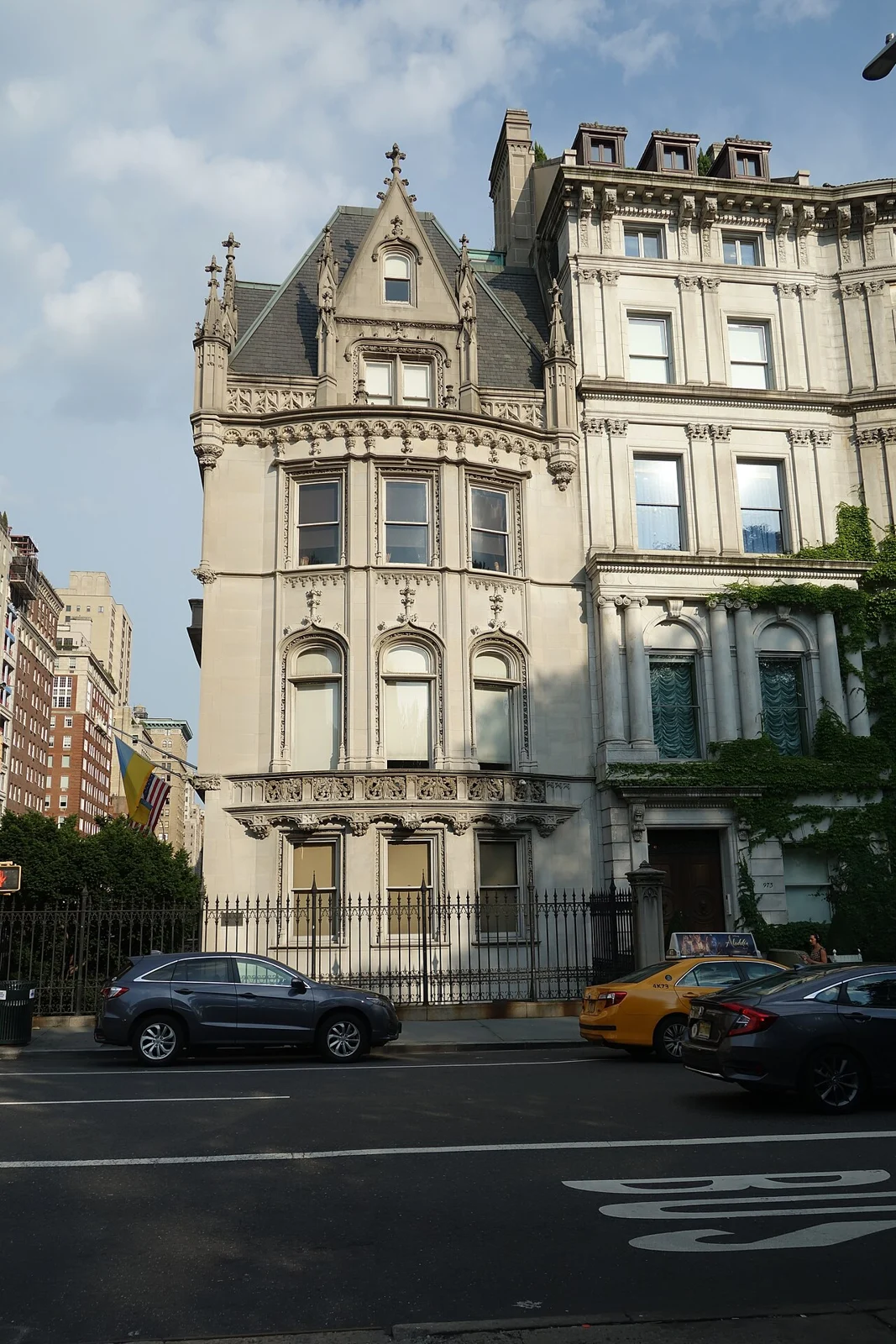
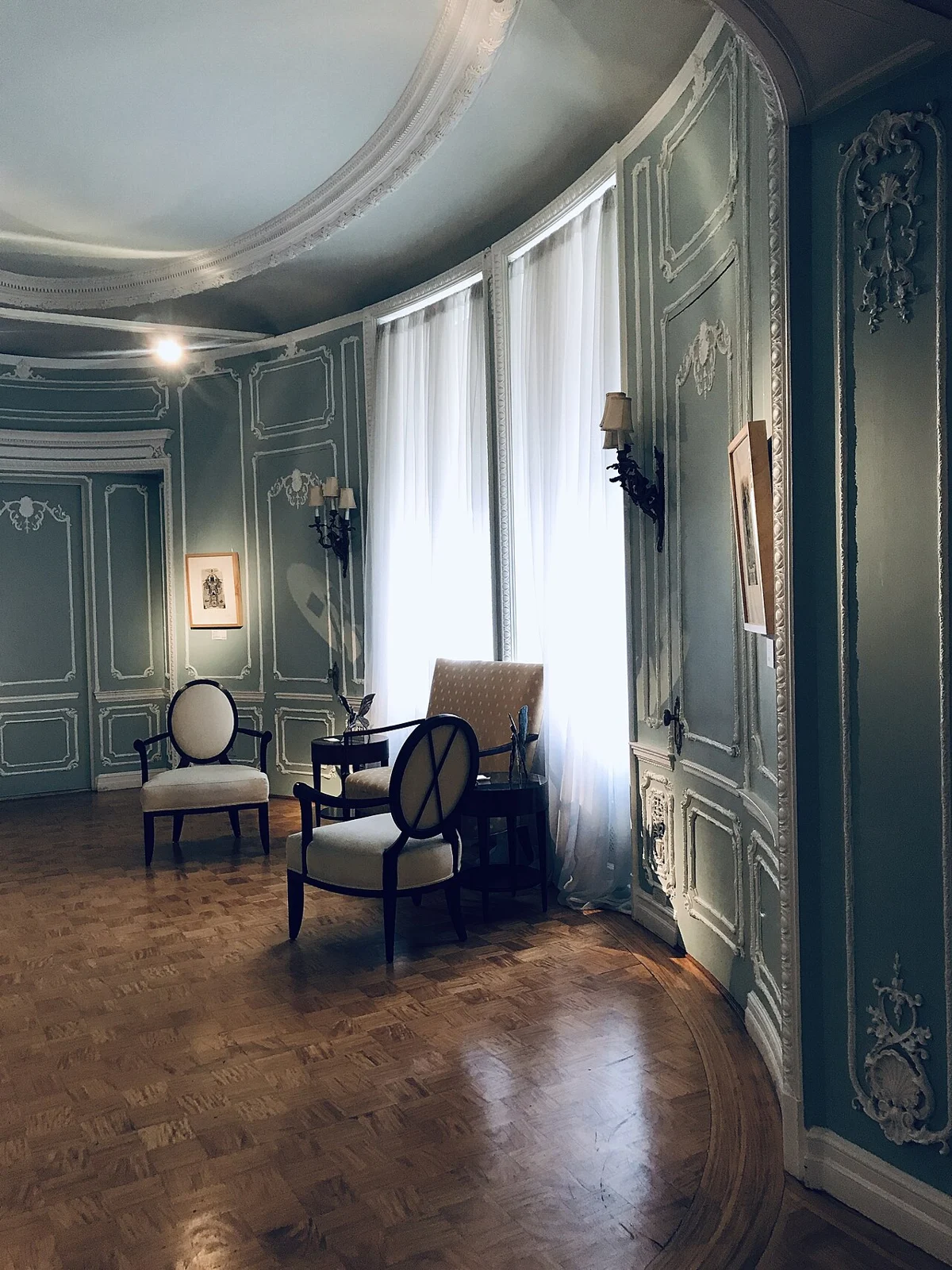
Fifth Avenue’s French Gothic silhouette becomes something more intimate at the Fletcher-Sinclair Mansion: carved stone outside, an unfolding sequence of rooms within. Isaac D. Fletcher commissioned C. P. H. Gilbert in 1897. The house later became the Ukrainian Institute of America’s home in 1955, giving a private residence a public cultural purpose.
The Institute promotes Ukrainian and diaspora art, music and literature through exhibitions, concerts, films and literary programs. Come for the cultural program as well as the architecture; the mansion is a setting for a living culture, rather than a furnished-house museum frozen in one family’s era.
How to visit: The Institute currently announces public opening Friday, October 30 through Sunday, November 1, 2026, noon–6 p.m. These are dated opening arrangements, not a permanent weekly schedule. Check the current exhibition and program before going; individual concerts and events may require tickets or registration, and access to every room is not promised.
972 Fifth Avenue · Payne Whitney Mansion
Albertine: a bookshop beneath the stars
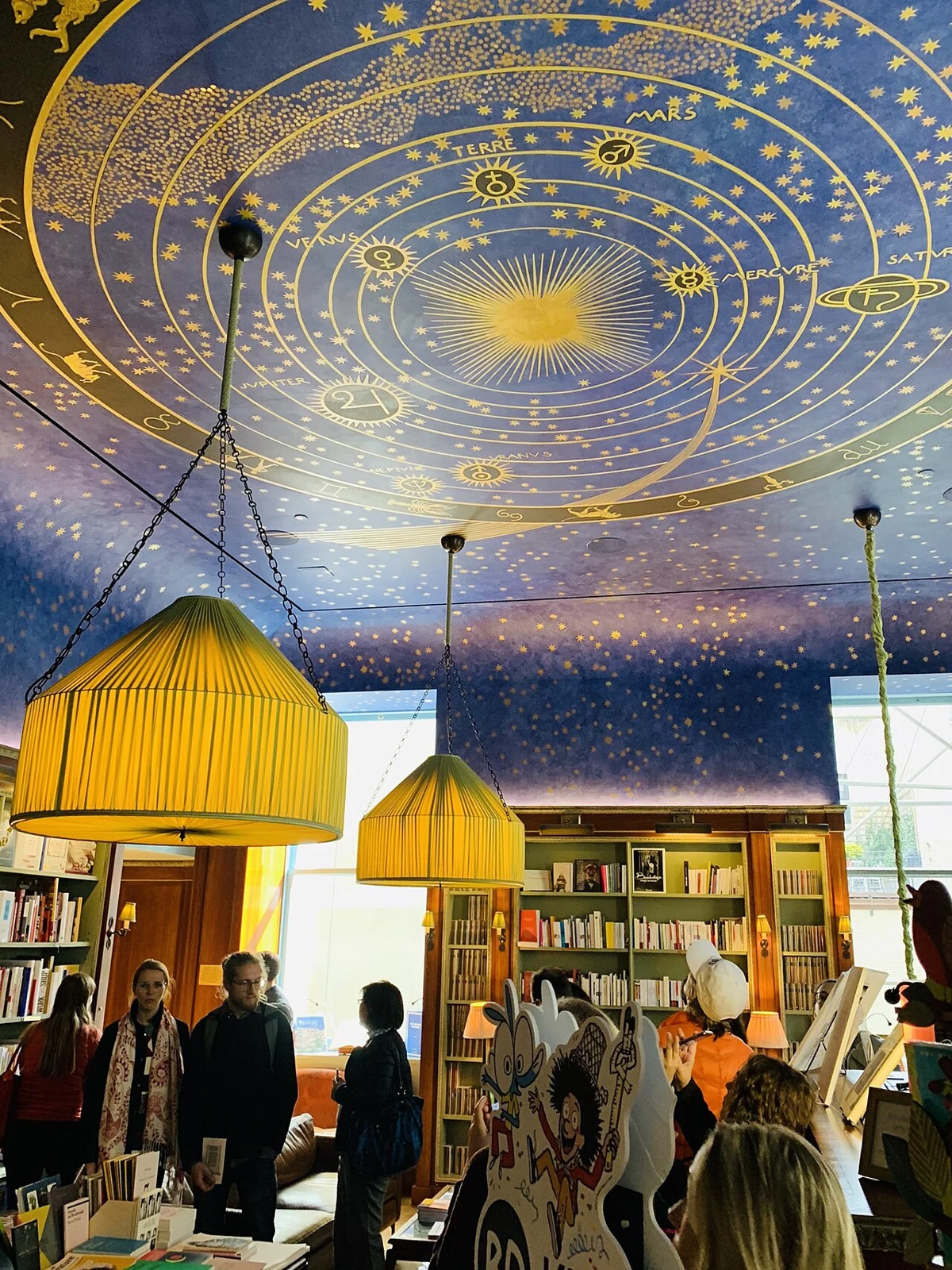
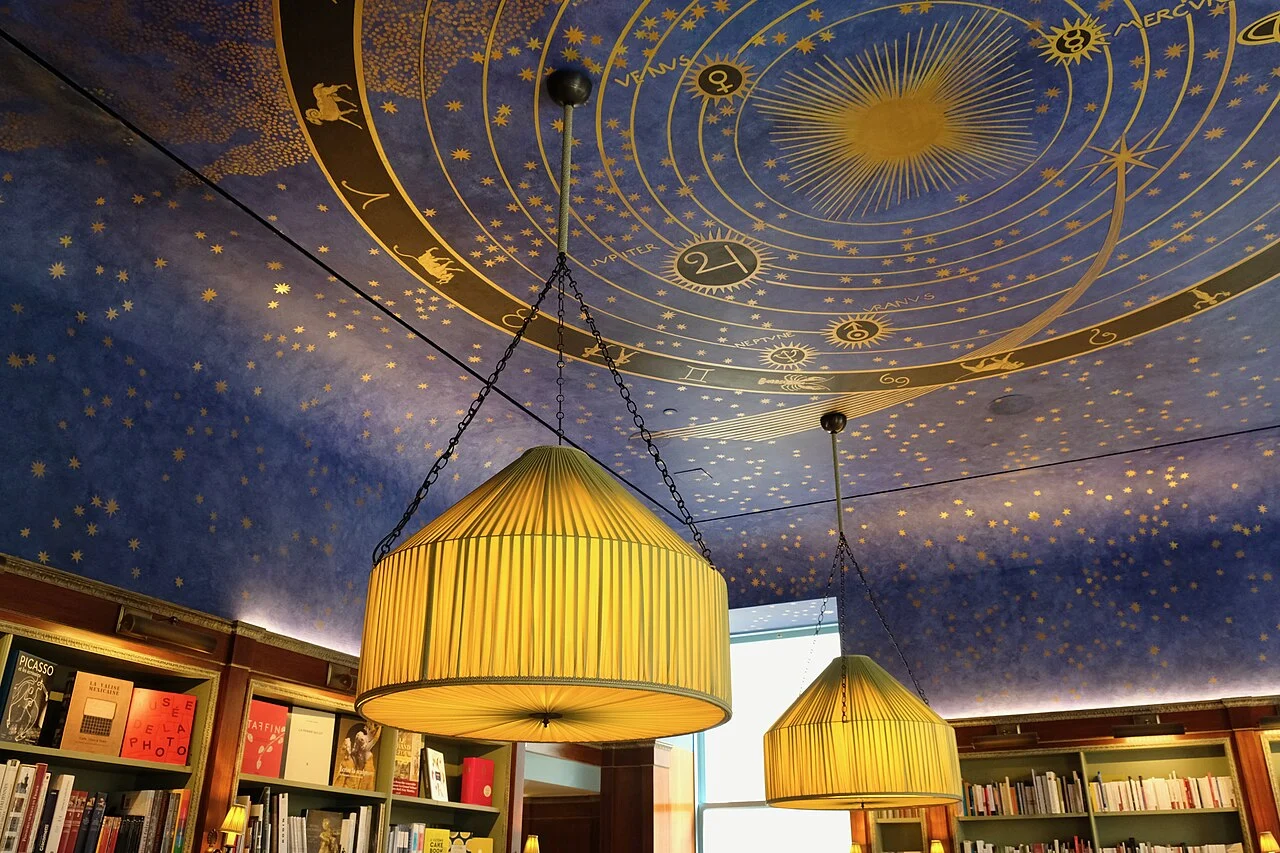
Oliver Hazard Payne commissioned this house in 1902 as a wedding gift for his nephew Payne Whitney. Stanford White designed and oversaw the mansion between 1902 and 1906. Since 1952 it has housed the French Embassy’s cultural services, making its second life a meeting point between New York and France.
Albertine opened inside in 2014, with interiors by Jacques Garcia and French- and English-language books from across the French-speaking world. The painted celestial ceiling is the great invitation to look up: it takes inspiration from Franz von Stuck’s music room at Villa Stuck in Munich. It belongs to the 2014 bookshop design, rather than being an untouched ceiling from the original mansion.
This is a particularly easy cultural detour: browse books, take in the room, and consult the literary calendar if you want to return for a conversation or reading. The bookstore gives visitors a way inside a remarkable building without implying access to the Embassy’s private rooms.
How to visit: Visit as a bookshop customer during its published opening hours. The official visitor block lists 10 a.m.–6 p.m. and Wednesday closure, but its footer conflicts on other opening days; confirm the day’s arrangements directly, especially for Sunday or Monday. Literary events have their own registration arrangements. A bookstore visit is not a full mansion tour.
867 Madison Avenue · East 72nd Street
Ralph Lauren: the Rhinelander Mansion’s retail reinvention
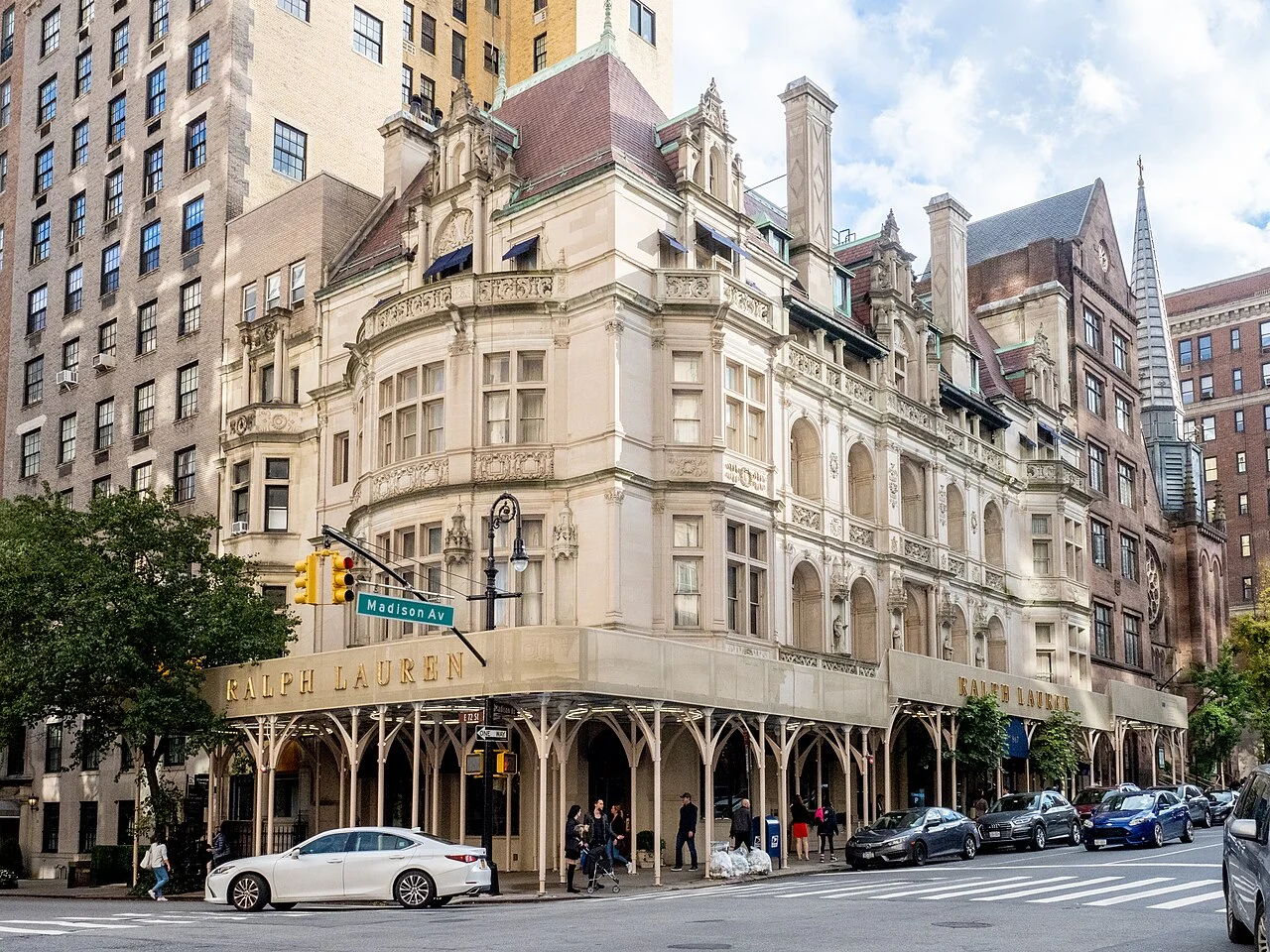
Gertrude Rhinelander Waldo’s French Renaissance Revival mansion was built in 1895–1898 to designs by Kimball & Thompson. Its elaborate roofline and carved stone make it one of Madison Avenue’s most theatrical survivals. Waldo never moved into the house, according to the city’s historic-district account; its later lives included commercial uses long before Ralph Lauren.
Today it is Ralph Lauren’s men’s flagship. The interiors tell a story of reinvention as much as preservation: the brand says less than five percent of the original interior remained when its project began in 1983. Working with designer Naomi Leff and craftspeople, it created richly finished rooms with mahogany balustrades, plaster ceilings, marble fireplaces and oak floors. What you see is a carefully constructed retail world within the historic shell, not an intact set of Waldo family rooms.
How to visit: The public route in is the operating store during its current retail hours. Browse the selling floors that are open to customers; this is not a ticketed museum or a promise of access to private areas. Check the flagship’s current hours before visiting. The men’s mansion at 867 Madison is distinct from the Ralph Lauren location across the avenue.
455 Madison Avenue · East 50th Street
The Villard Houses: a courtyard and a hotel’s Gilded Age rooms
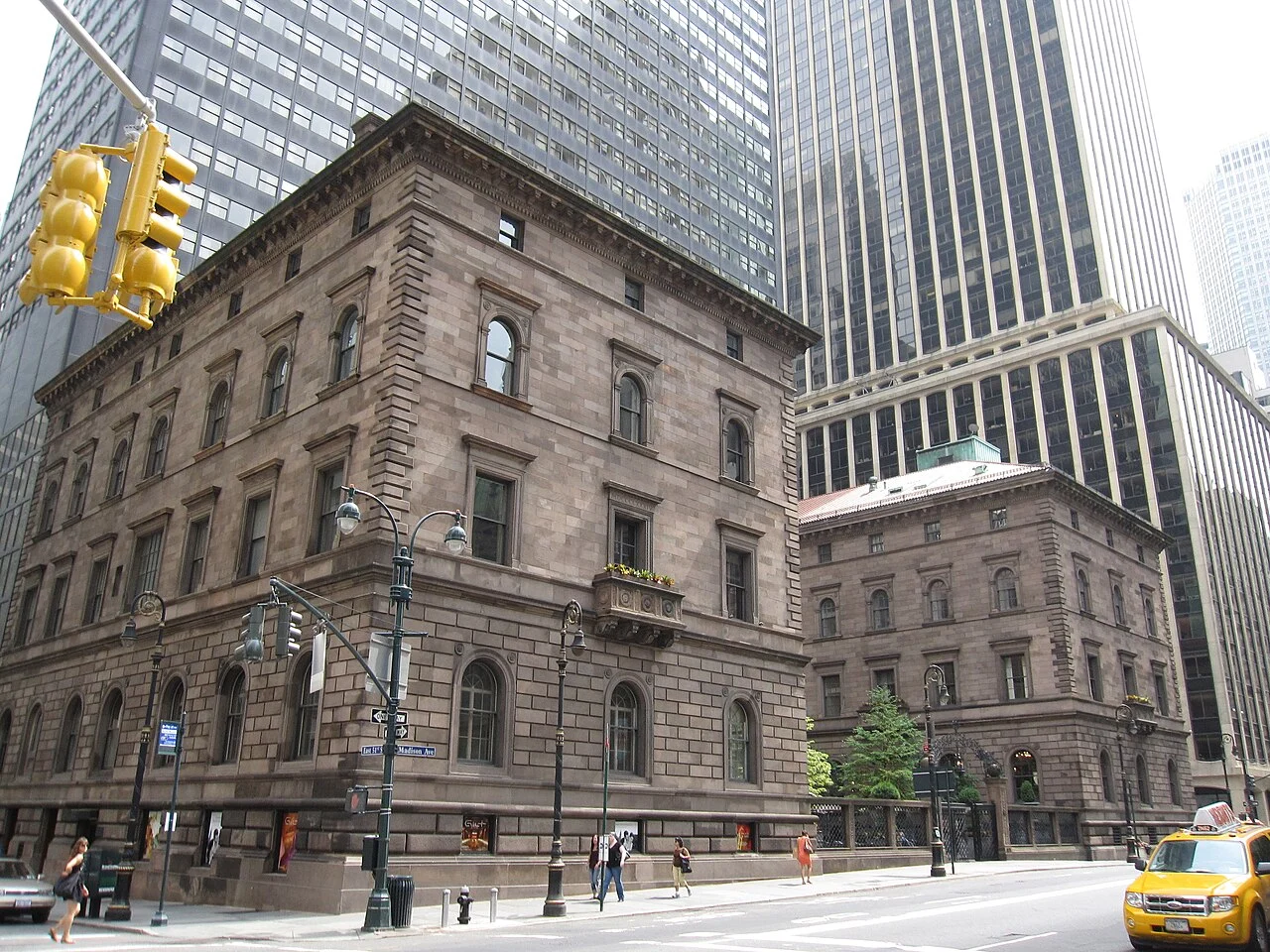
The Villard Houses offer a different kind of mansion encounter: a group of six Italian Renaissance townhouses arranged around a courtyard. Henry Villard’s project, designed by McKim, Mead & White, began in 1882 and was completed in 1884. The ensemble now forms the historic face of Lotte New York Palace, with the modern hotel tower behind it.
The courtyard is the most straightforward architectural stop, and published hotel dining and bar arrangements can provide a reason to linger. Treat the interiors as a working hotel, however: a historic hospitality setting does not make every drawing room a public gallery.
How to visit: Check the hotel’s current courtyard and hospitality hours and any private-event restrictions. Its currently advertised one-hour Saturday 10 a.m. mansion tour is complimentary for hotel guests, with concierge sign-up; it is not advertised as an unrestricted public walk-in tour. Public courtyard or bar access and a hotel-guest tour are different visits.
1 East 78th Street · NYU Institute of Fine Arts
Duke House: enter through art and public programs
Completed in 1912, the James B. Duke House brought French Classical architecture to the corner of Fifth Avenue and 78th Street. Designed by Horace Trumbauer’s office, with an early contribution by Julian Abele, it drew inspiration from the Château Labottière in Bordeaux. Nanaline Duke and Doris Duke donated the family house in 1958; NYU’s Institute of Fine Arts has used it as its academic and administrative home since 1959.
The route inside is through an announced exhibition or public program, rather than an ordinary house-museum ticket. That makes this a place to plan around a cultural date: scholarship and contemporary art now occupy a building created for a private family.
How to visit: The Institute announces Tith Kanitha’s Journey into Clarity for November 5, 2026–May 14, 2027, and a public conversation on Monday, November 9 at 6 p.m., with RSVP. Consult the official exhibition or event page and confirm entry arrangements before going. Academic building hours do not establish public gallery hours, and a public program is not a general mansion tour.
Three more from the video: check access before planning
The Otto Kahn and James Burden mansions are active school and private-event spaces. Their illustrated online tour is a way to explore the rooms virtually; it is not evidence of a regular public walk-in tour. They are not listed here as ordinary museum-ticket visits.
The De Lamar Mansion is a working Polish consulate at 233 Madison Avenue. Watch for a specifically announced cultural program or public open house. Consular appointment hours are not mansion-visiting hours; no regular public house tour was verified for this guide.
A related architectural stop · Fifth Avenue at 52nd Street
Cartier: the mansion exchanged for pearls
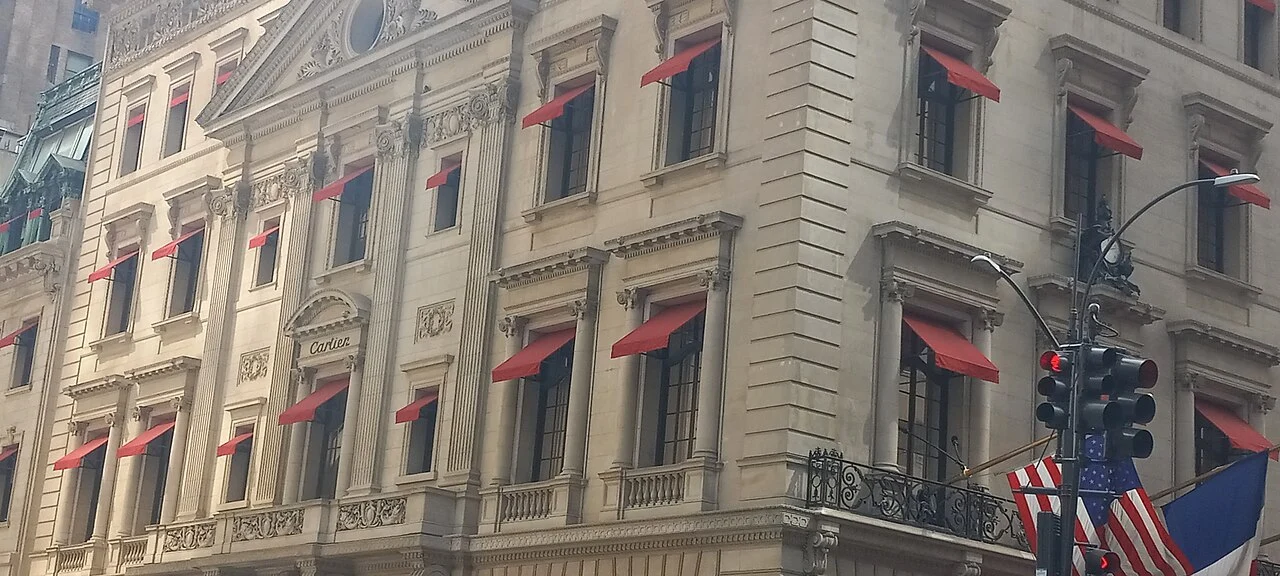
The Morton F. Plant House has one of the most memorable second lives on Fifth Avenue. In 1917, Morton Plant and Pierre Cartier arranged the mansion’s exchange for the two-strand natural-pearl necklace that Maisie Plant admired. The National Gallery of Victoria’s Cartier exhibition records 128 matched, graduated natural pearls and a valuation of $1 million at the time. The celebrated transaction also included a nominal $100 cash payment, according to the contemporary transfer account reproduced by Hodinkee.
The story is about changing value as well as beautiful objects. Cultured pearls transformed the pearl market during the twentieth century, while Cartier established a lasting Fifth Avenue flagship in the former house. New York City’s landmark designation report records a sale of the pearls for $151,000 in January 1957, after Maisie Plant’s death. That historical figure is evidence of their changing market, not a current valuation. Its current boutique page still tells the exchange story. Visiting the boutique is a retail visit, with its own opening hours; it is not a museum ticket or a promise of access to every room.
What would the necklace be worth today?
No verified current appraisal of the original Plant necklace was found. Its present condition, documentation and ownership would matter, as would the size, quality and matching of the natural pearls. The Cartier name and the mansion provenance are relevant history, but they do not establish a price.
For context, Sotheby’s listed a different circa-1925 Cartier natural-pearl and diamond necklace in 2026 with an estimate of $150,000–$250,000. That is an auction estimate for another object, not a sale result or a valuation of the Plant pearls. Nor does an inflation conversion of the 1917 $1 million establish what either the necklace or the mansion would sell for now. A precise present-day comparison between the two would require separate, credible valuations.
Visit the Cartier Fifth Avenue Mansion · NGV’s exhibition history of the exchange · NYC landmark report and the 1957 pearl sale · Historical transfer account · Sotheby’s 2026 comparison object
Make a cultural day of it
Museum Mile: Jewish Museum and Cooper Hewitt are close enough to make a useful pair. After Neue Galerie’s announced reopening, it offers another focused collection nearby. Choose two visits and leave room to look; fitting every building into one afternoon would turn the rooms into a checklist.
Collector interiors: Give the Frick or Morgan enough time for both the rooms and the works they contain. Morgan’s library was purpose-built beside a residence, so its story differs from a family house later adapted for museum use.
Beyond Manhattan: Plan Bartow-Pell, Alice Austen House or Louis Armstrong House as a destination in its own right, allowing travel time and observing each house’s tour schedule. Ordinary admission, a free visit and a timed guided tour offer different ways in; none requires a gala invitation.
Books, culture and architecture: Albertine, the Ukrainian Institute and Duke House add different cultural reasons to enter a mansion. Plan around actual bookstore hours, announced openings or a public program. Ralph Lauren and the Villard Houses are retail and hospitality stops, with their own access arrangements.
Keep exploring
For a larger historic-house itinerary, the Historic House Trust’s official roster includes sites across all five boroughs. Some have limited tours or restoration closures. Morris-Jumel’s official site currently posts a temporary closure, so it is not included here as an ordinary open-house recommendation.
Browse museums, daytime visits and evening programs → · Compare museum memberships and evening benefits → · Explore the dated cultural calendar →