
Village Halloween Parade 2026: The City in Costume
Firehorse puppets, illuminated gowns and inventive costumes on Sixth Avenue: David Shusterman’s photographs, films and report from the 2026 Village Halloween Parade.
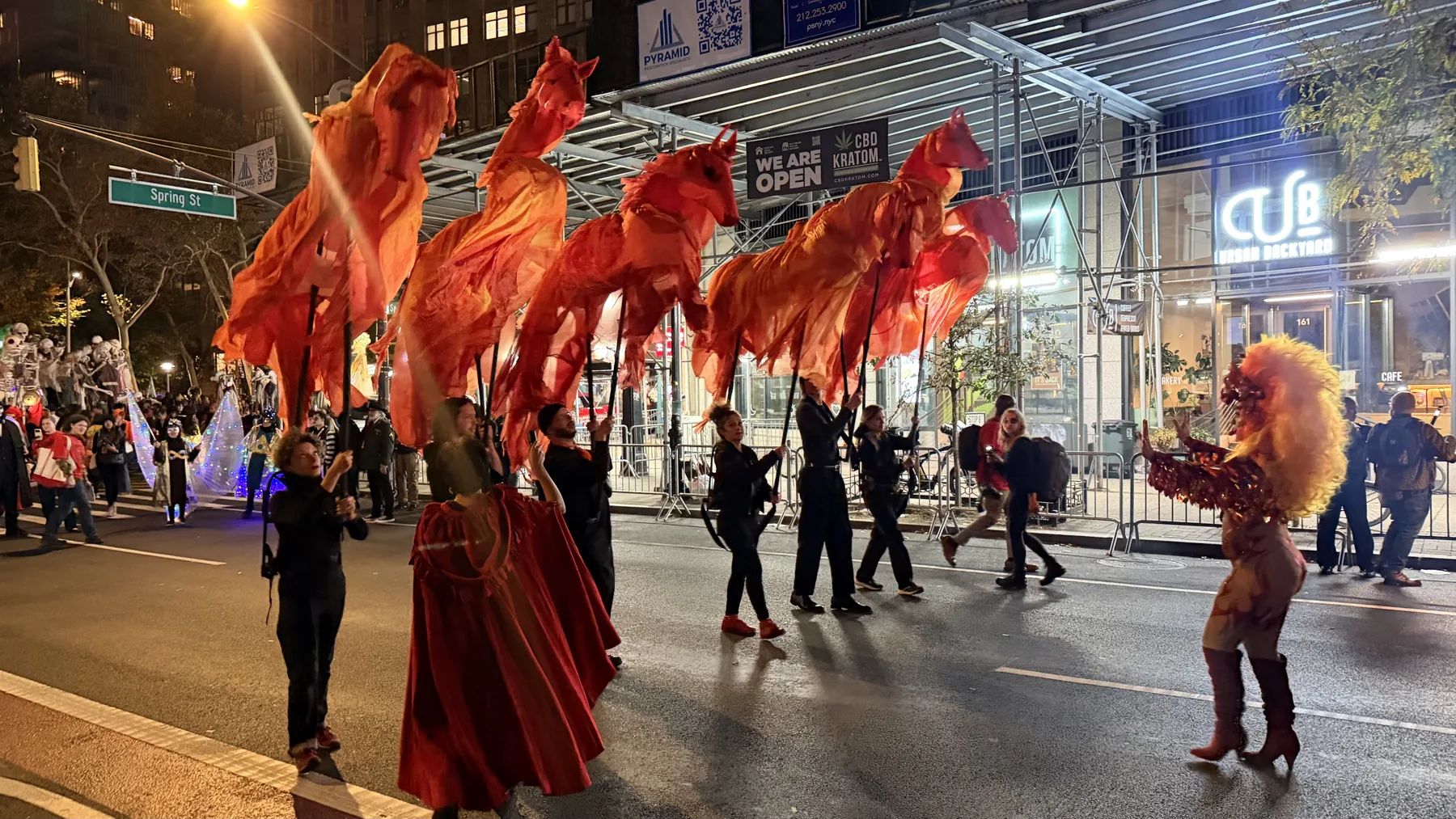
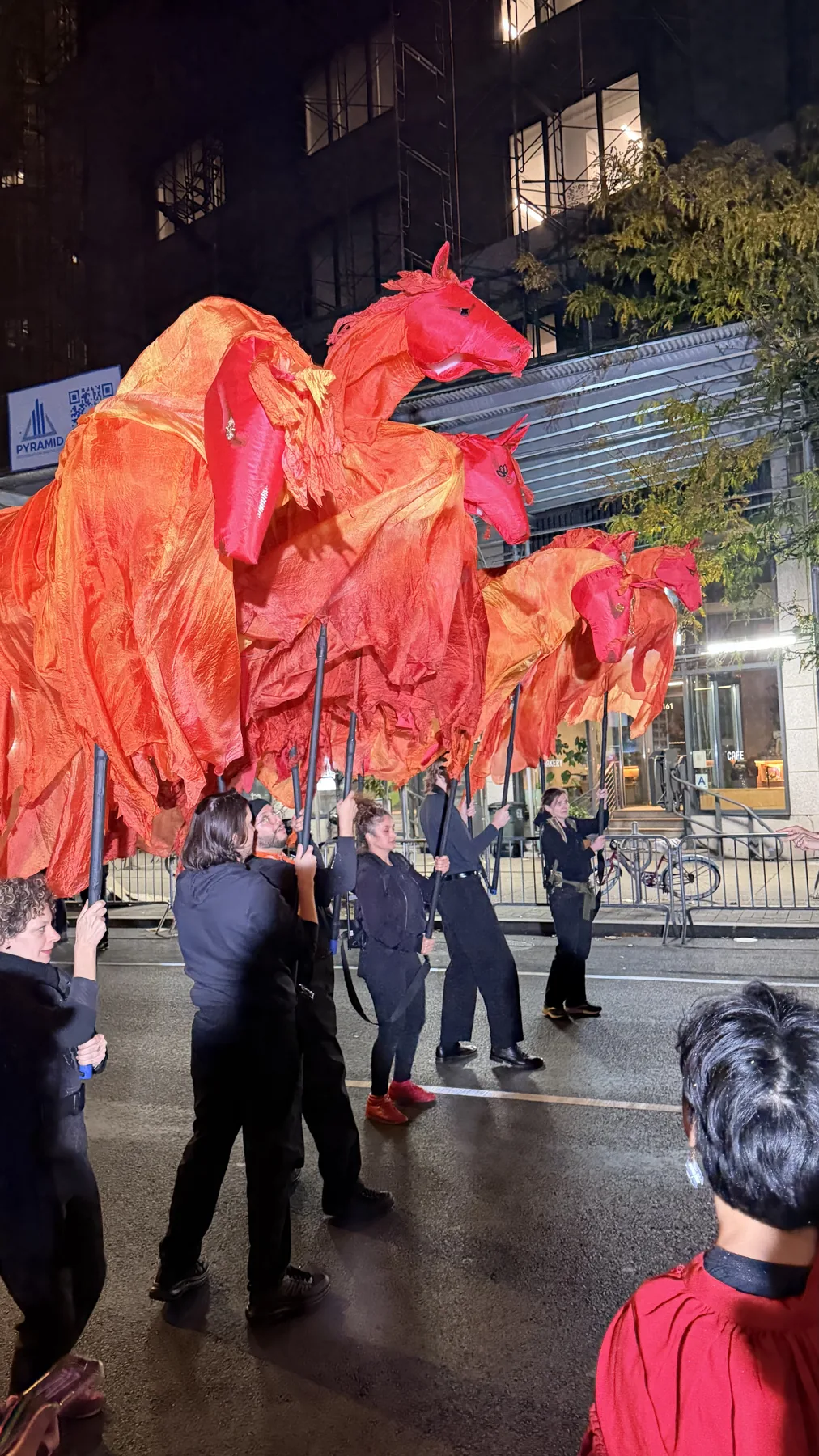
The horses appeared above the crowd in a blaze of orange and red. Their fabric bodies stretched across the avenue, carried on poles by performers whose movements gave the creatures their stride. Beneath them were the familiar markings of a New York street: a bus lane, a crosswalk, scaffolding. For a few moments, that everyday infrastructure became the setting for something improbable.
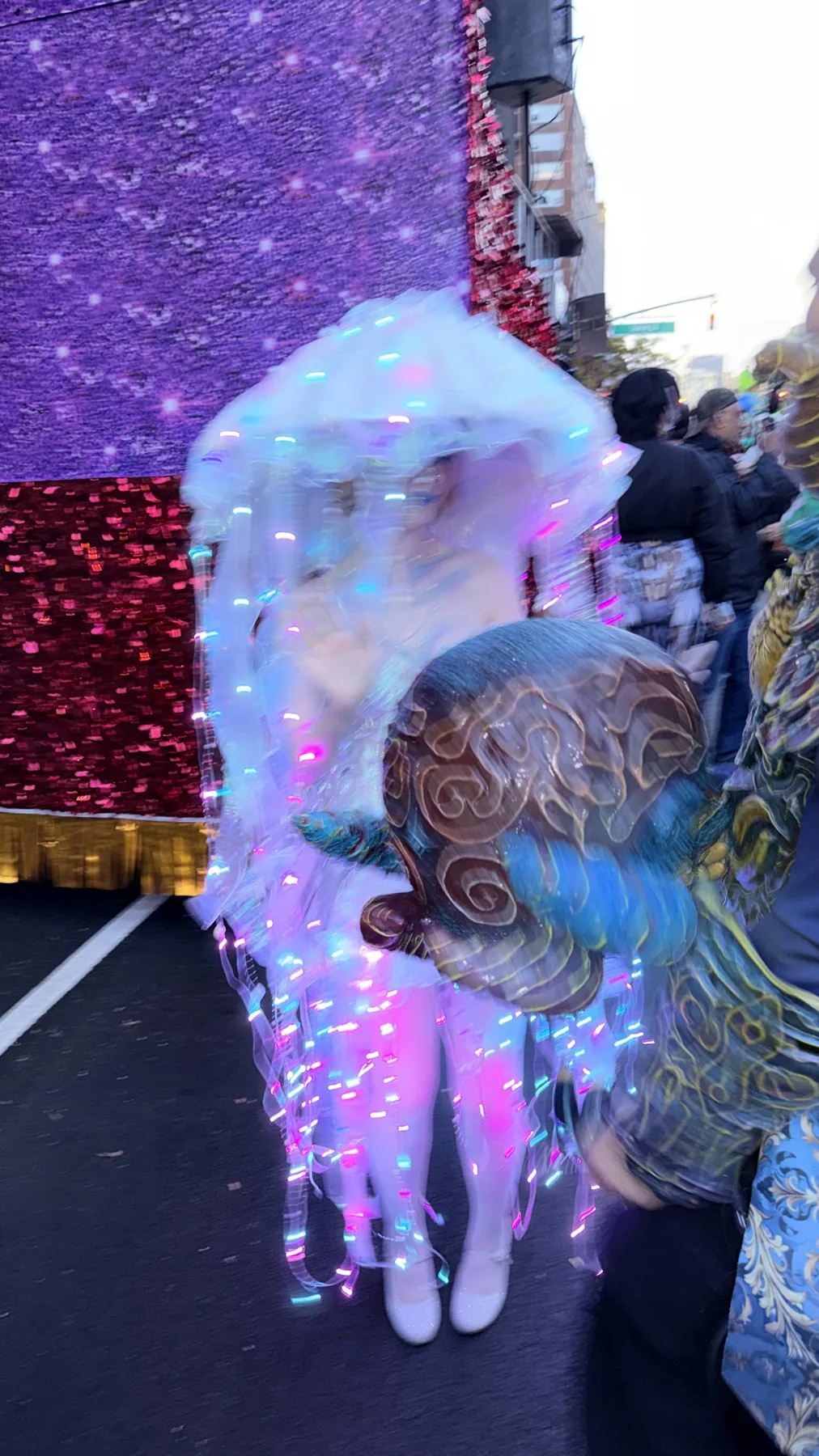
That encounter between the ordinary city and extraordinary invention defined the Village Halloween Parade on October 31. Photographing the procession from street level, the most compelling subject was often the relationship between a costume and its surroundings: a luminous jellyfish against a dark building, a painted face beneath an enormous flowered hat, a parade of dreamlike figures rising above the spectators’ phones.
The 53rd annual Village Halloween Parade procession took “Body & Soul” as its theme. On the avenue, the idea found a wonderfully literal form. Costumes changed the shape of their wearers. Puppets depended on the people beneath them. Elaborate constructions moved because someone had worked out how to carry, balance or dance inside them.
Before the avenue became a stage
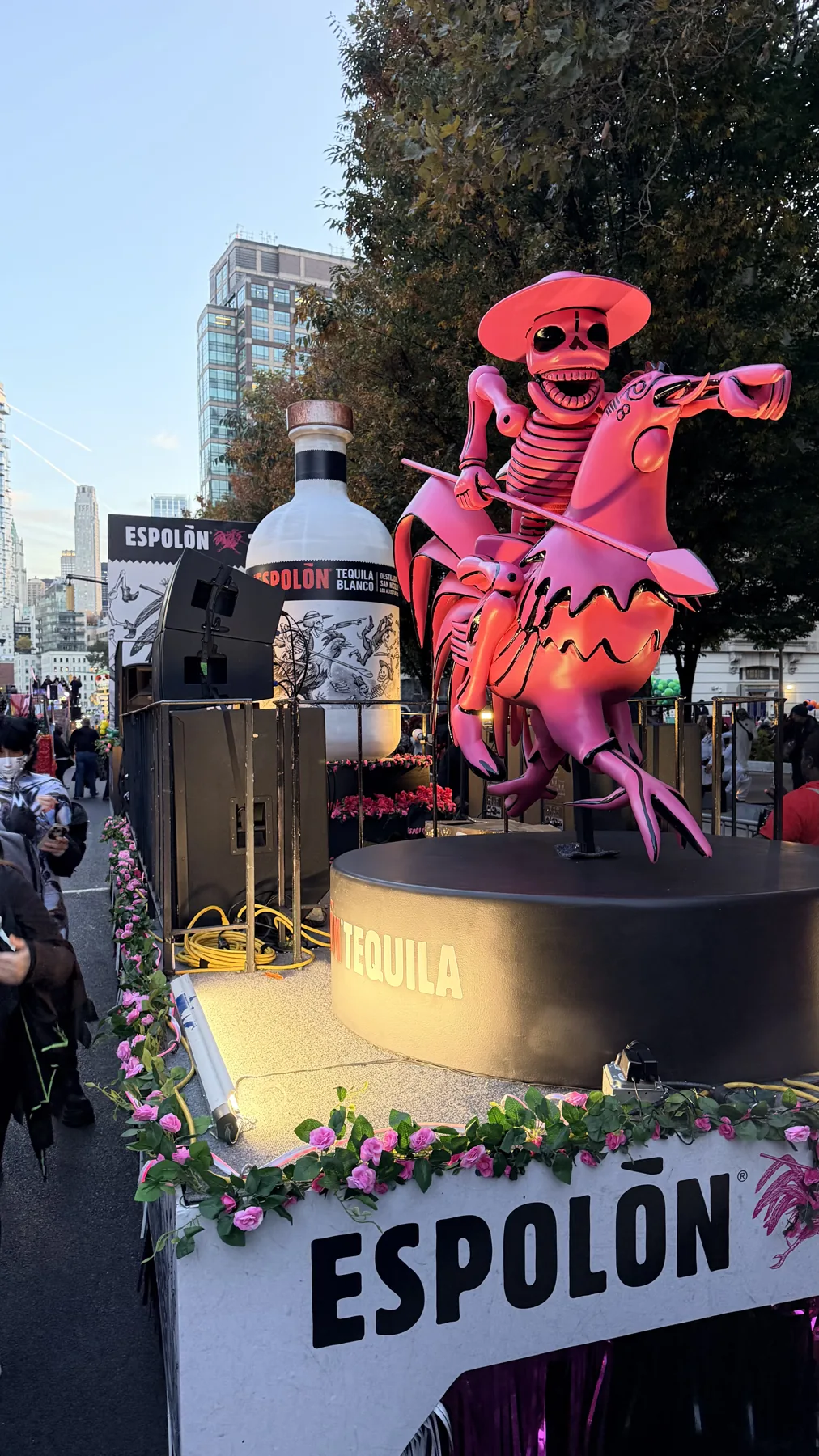
The daylight photographs tell a different part of the story. Floats waited beside cars and barriers. A pink skeletal figure loomed above a flower-trimmed platform. A jellyfish costume, with a translucent umbrella-like canopy and dangling lights, had the delicacy of a small installation. Elsewhere, musicians and costumed participants gathered among the practical arrangements of staging a procession.
These moments deserve space alongside the nighttime spectacle. They reveal the scale of the effort without diminishing its magic. An illuminated costume has to be assembled and transported; a towering puppet has to be held upright. The parade’s exuberance is built out of those individual acts of preparation.
As daylight receded, lights that had been decorative became defining. Floral costumes glowed in pink, yellow and blue. The EdwardMorgan Ballet’s name appeared on a banner in front of its brilliantly dressed group. Streetlights, windows and the colors of the procession began to overlap, making the city itself part of the composition.
The lighted dresses were particularly effective at this hour. Large floral shapes and layered skirts established their silhouettes; points of colored light carried those shapes into the dusk. In the footage, the costumes keep changing as their wearers turn. A skirt becomes a ring of light, then a cluster of flowers, then a figure moving away down the street. The transformation is simple to describe and much more absorbing to watch.
From daylight into dusk
Preparations and illuminated costumes on October 31.
In motion
October 31, 2026 · Silent event film. Open video
October 31, 2026 · Silent event film. Open video
Photographs and video by David Shusterman.
Firehorses and a waking dream
The Firehorse presentation brought the evening’s most striking change of scale. The official program credits puppeteer Basil Twist, choreographer Julie Atlas Muz and producer Barbara Busackino of Tandem Otter Productions. Seen from below, the orange and red horses seemed to occupy a second avenue above the people walking beneath them.
The horses also made the mechanics of puppetry unusually legible. The poles were visible, as were the people guiding them, yet neither spoiled the illusion. A lowered head and a lifted length of fabric were enough to suggest an animal moving through the crowd. The human effort and the imagined creature occupied the same frame.
Their color did much of the work. Against the dark façades and the hard white light of street lamps, orange and red read as flame. Seen together, the creatures formed a moving canopy. Seen individually, they revealed the delicacy of material that could look massive from a few steps away. The strongest views caught both scales: the horse overhead and the handler at street level.
Another sequence exchanged that fiery palette for the pale light of a dream. Processional Arts Workshop’s Alex Kahn and Sophia Michahelles created “Out of Body,” a puppet presentation built around sleeping figures and an unsettled domestic world. In the footage, suspended figures, oversized clocks and open-window structures hover above the procession. Familiar objects acquire unfamiliar proportions.
The effect is especially persuasive in a street setting. New York supplies its own vertical backdrop; the puppets introduce a different kind of architecture, temporary and animated by human hands.
The clocks and window frames sharpened that sense of dislocation. A clock belongs on a wall, a window in a building; lifted into the procession, both seemed to have escaped their usual places. The figures above them had the pale, floating quality of something glimpsed halfway through sleep. Behind the procession stood actual windows, stacked into the façades of the avenue. The invented and the real city briefly shared a skyline.
Firehorse above the crowd
Orange and red puppets bring another scale to the avenue.
In motion
October 31, 2026 · Silent event film. Open video
Photographs and video by David Shusterman.
The pleasure of looking closely
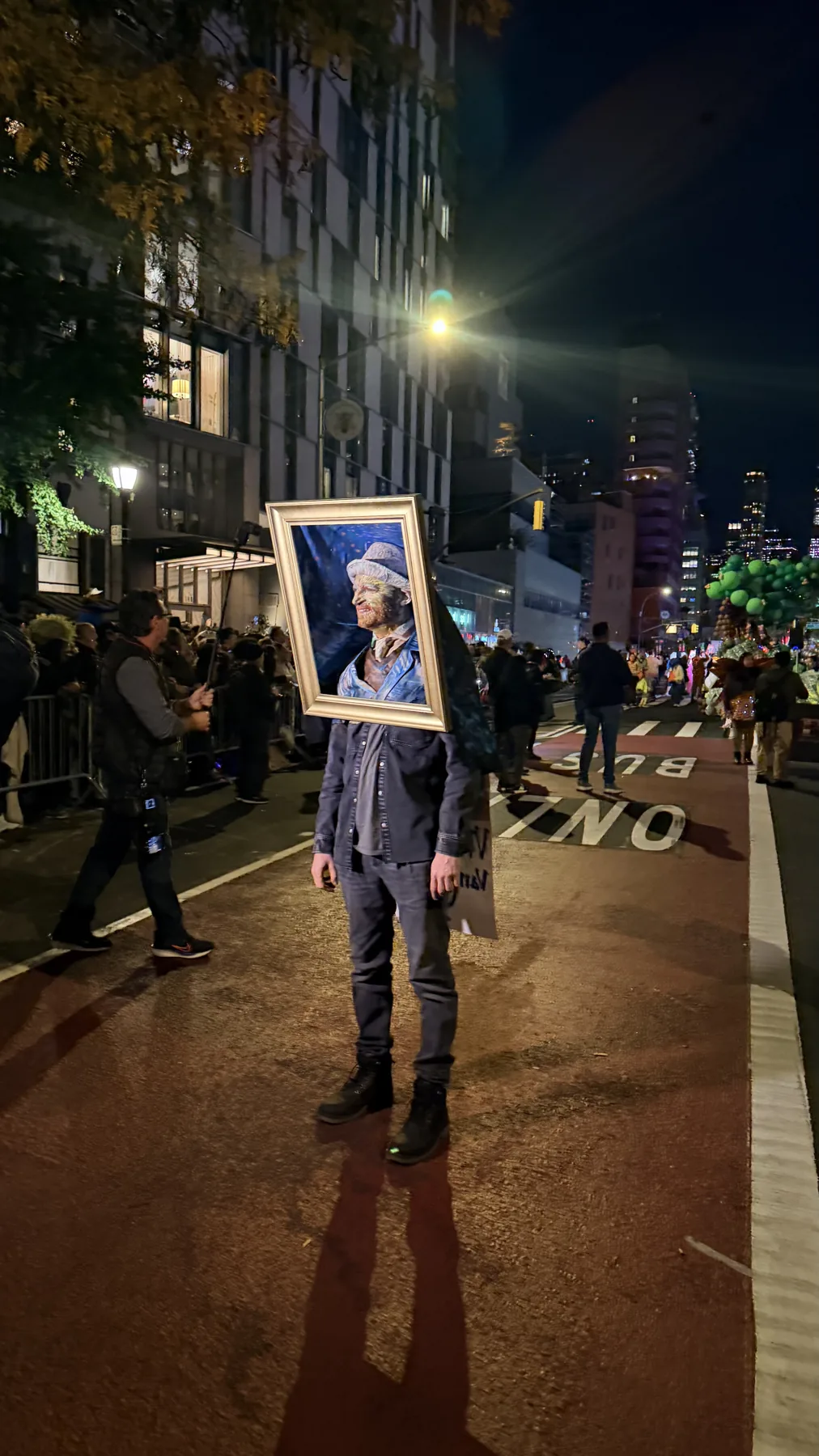
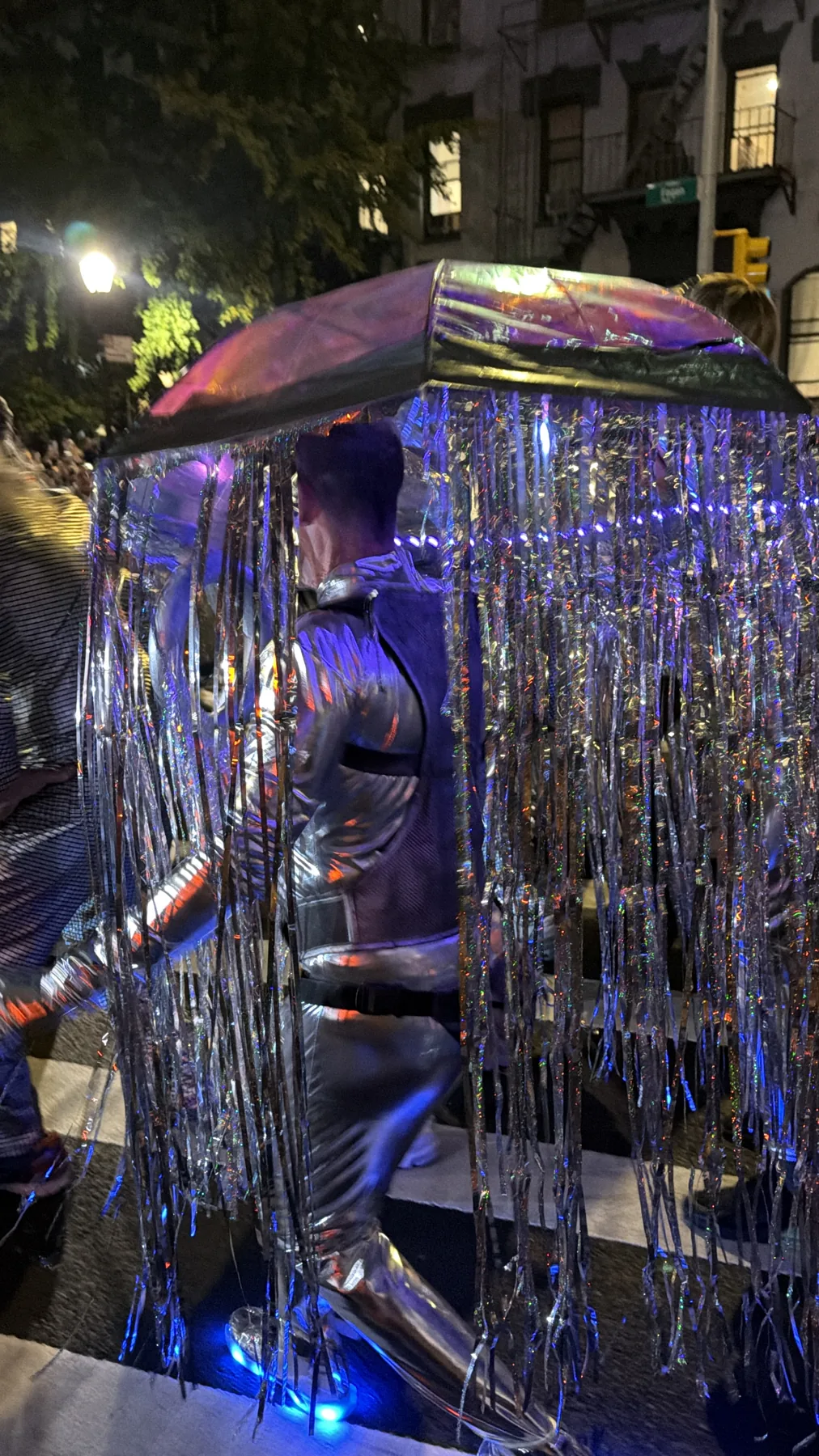
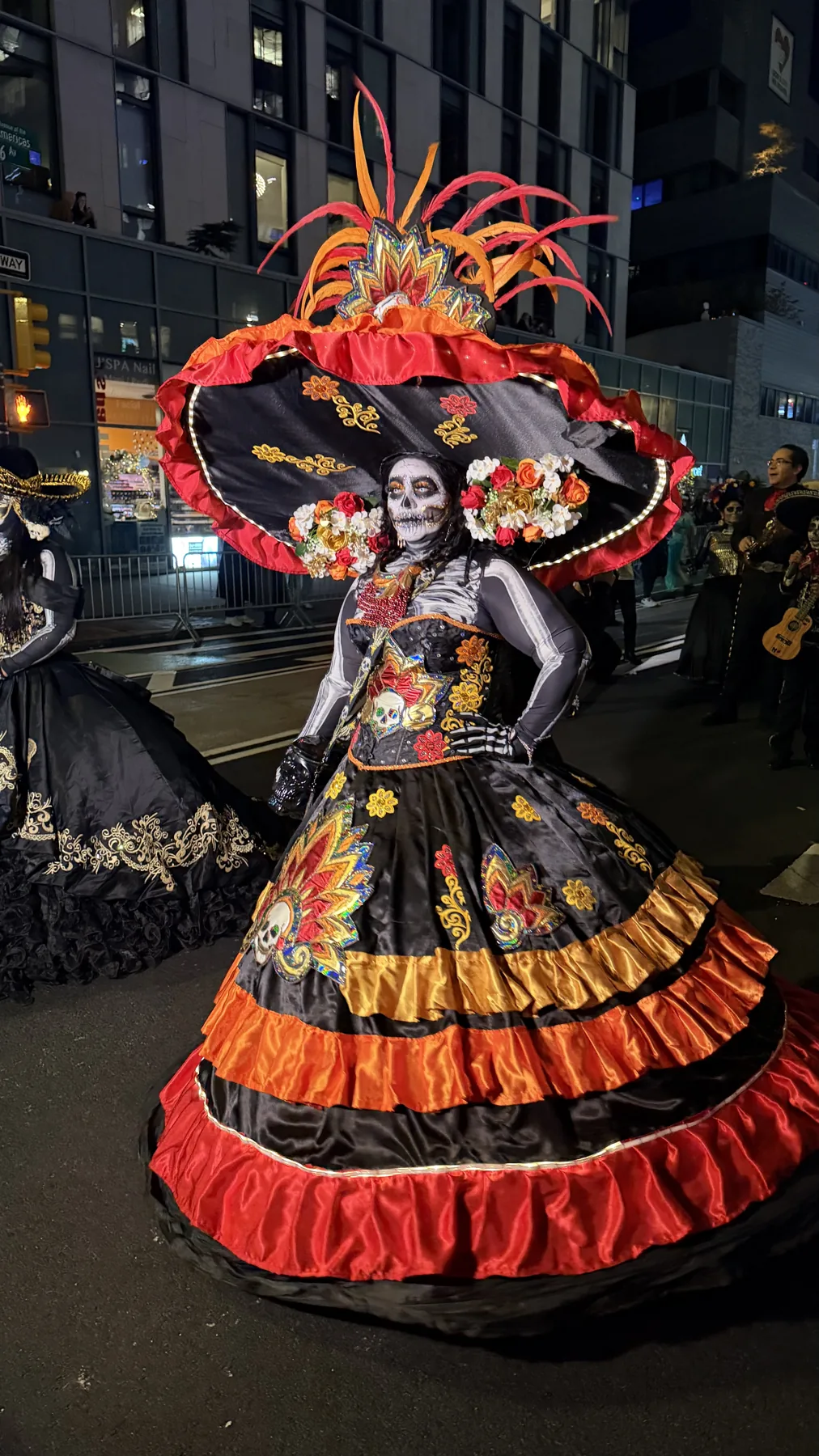
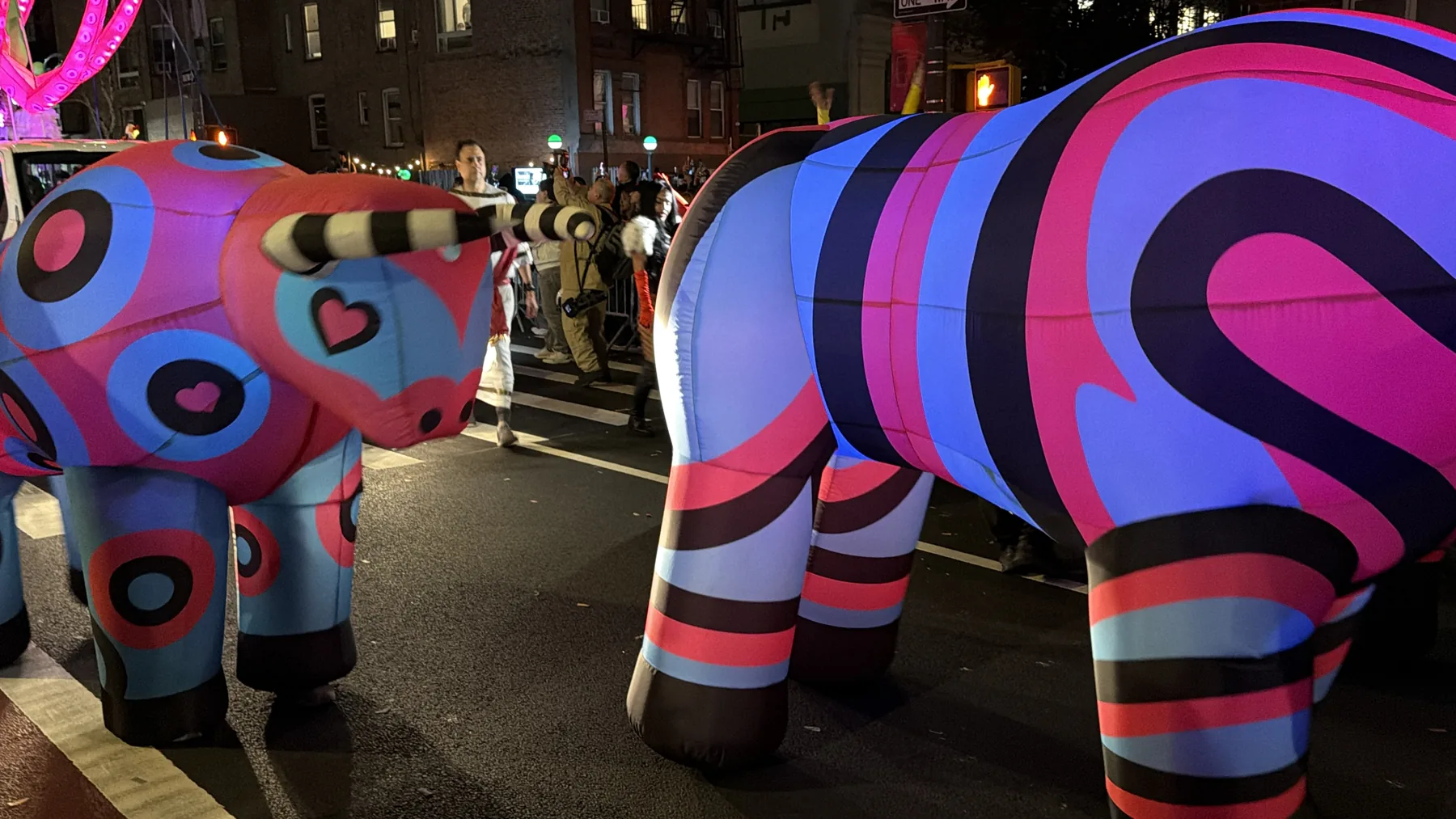
The smaller costumes rewarded just as much attention. One participant wore a portrait frame around their head, turning a walk down the avenue into a mobile painting. Another appeared beneath a broad red-and-black hat, with skull makeup, flowers and an orange-tiered skirt. Silver fringe transformed umbrellas into shimmering canopies. Brightly patterned inflatable animals brought a different, playful scale to the street.
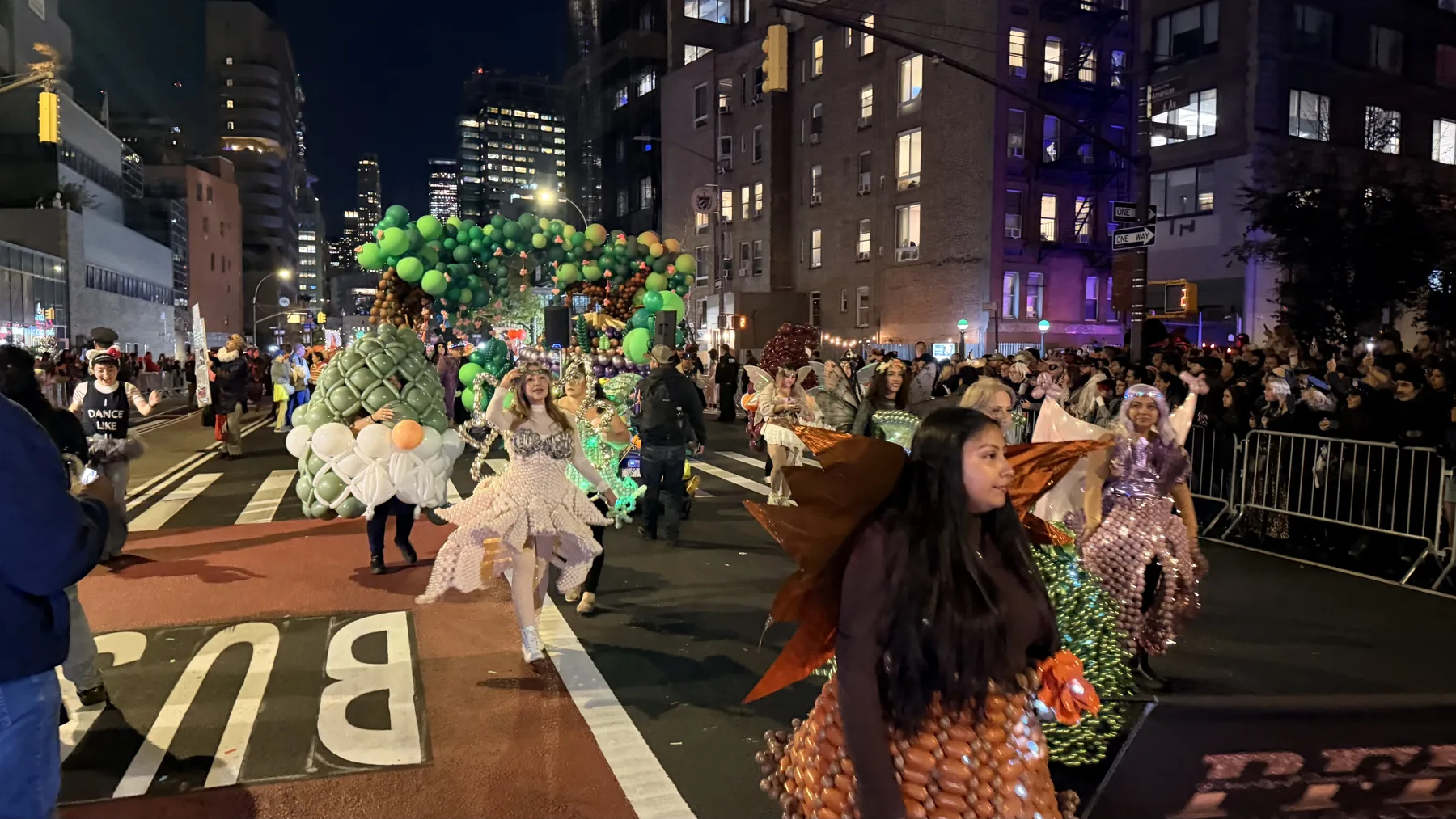
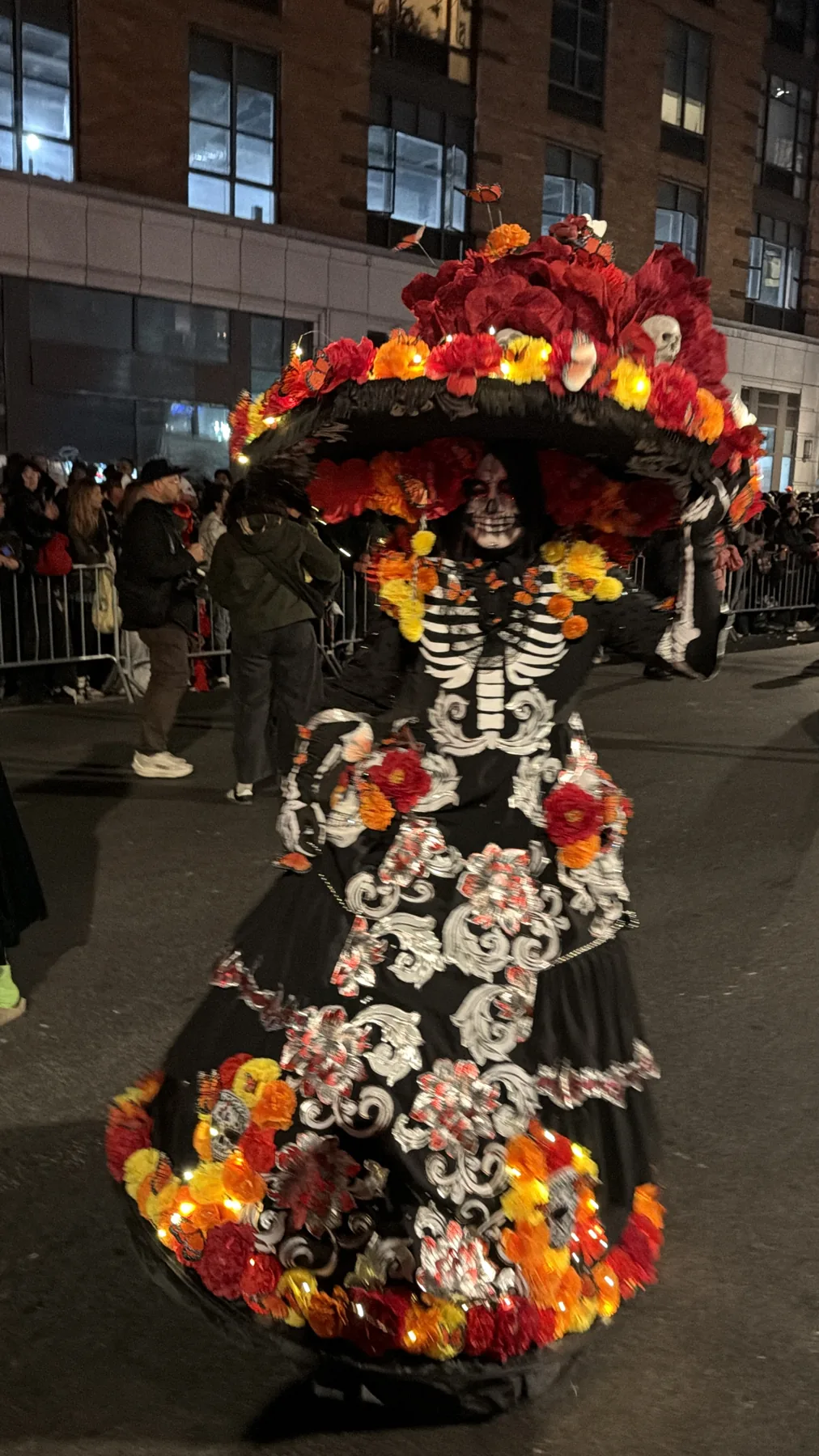
There was no single visual language. Ornate dress shared the route with visual jokes, skeletal figures, luminous gowns and coordinated groups in metallic silver. A wide view could hold several of those ideas at once. Look more closely, and the character of the evening emerged in a single face, a decorated sleeve or the way someone carried an oversized hat.
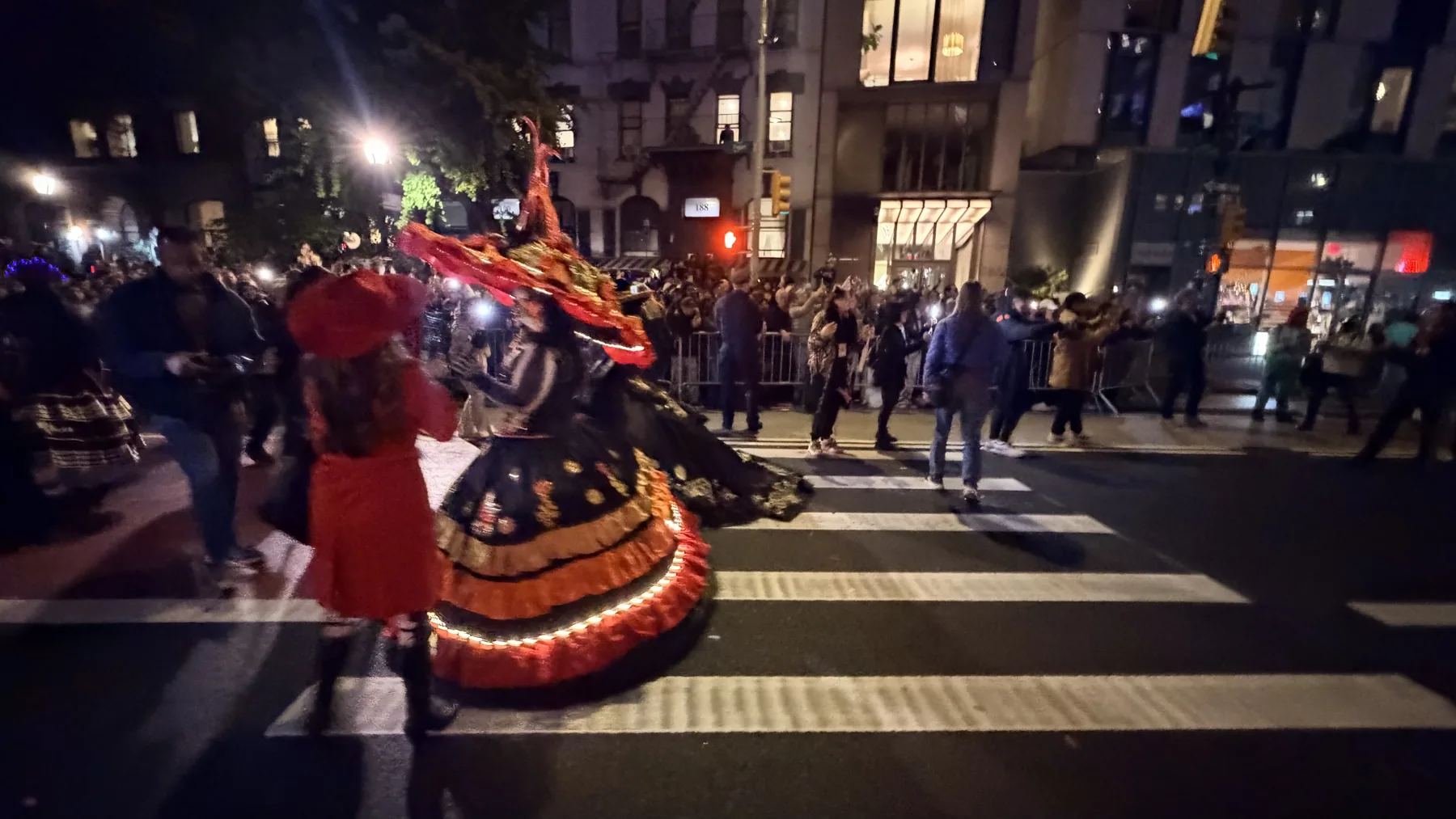
The orange-and-black skirt was one of the evening’s most satisfying compositions. Broad tiers gave it weight and shape, while flowers, skull makeup and a sweeping decorated hat concentrated detail around the face. It worked across the avenue as a strong silhouette and at close range as an accumulation of small decisions. The photographs catch that distinction: the full costume against the street, then the face framed by its decoration.
The framed portrait offered a quieter joke. Its wearer supplied the face that a painting would ordinarily contain, with the frame turning the surrounding street into an accidental gallery. Nearby, silver fringe played a different trick, catching available light in many small flashes. These were costumes made to be encountered in motion, with their surroundings supplying part of the effect.
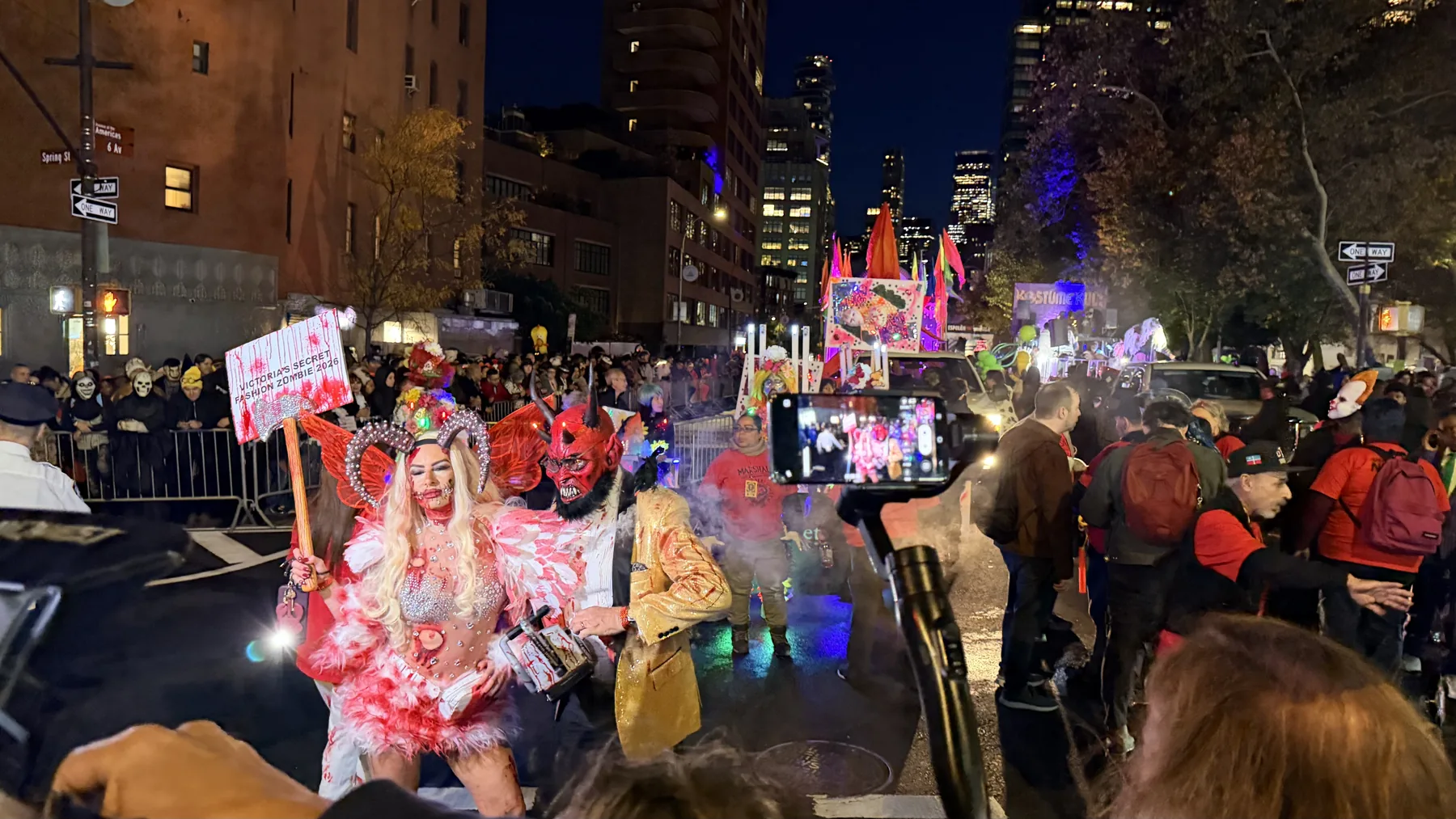
Along the barriers, spectators became another part of the picture. Their raised phones and close-packed silhouettes framed the performers, making each stretch of pavement feel like a stage with an audience on both sides.
Costume as a close-up
Portrait frames, flowers, silver fringe and an exuberant orange-and-black skirt.
In motion
October 31, 2026 · Silent event film. Open video
Photographs and video by David Shusterman.
The avenue as a shared stage
The street mattered as much as any individual costume. White crosswalks cut clean lines through the photographs. Traffic signals hung over improbable creatures. Scaffolding and shopfronts stayed plainly visible behind the spectacle. Those details gave the evening its particular New York character: fantasy carried through a working city, with the ordinary surroundings still in view.
From street level, there was also a constant exchange of scale. A close portrait filled the frame; a few steps farther away, the same person became part of a much larger procession. Groups in coordinated costumes made broad patterns across the roadway. Individual participants supplied interruptions and surprises. At the barriers, rows of spectators brought the scene back to human proportions.
The footage adds what a still photograph necessarily holds in reserve. Fabric lifts and settles. A puppet changes direction. An illuminated skirt turns, and its lights trace the movement. These brief passages are worth watching beside the photographs because the parade was built around that transition from an object to a performance. A costume could be beautifully made while standing still; the street gave it somewhere to go.
Voices from the avenue
The conversations along the route brought the spectacle back to the people making it happen. At the barrier, the practical question was how early someone had to arrive for a place at the front. One spectator said five o’clock. It was a small piece of local knowledge, offered from that particular patch of pavement: before the first towering puppet passed, there had already been an evening of choosing a spot and waiting for the street to change.
Behind the procession, a woman in a red marshal’s shirt described another kind of preparation. Her work was to help bring the participants together so the parade could unfold for the people watching. Asked whether that was a difficult undertaking, she said it usually ran smoothly. Amid so many elaborate costumes and moving parts, the matter-of-fact answer was revealing. The spectacle depended on people whose attention was on getting everyone into place.
A conversation with a Kostume Kult participant offered a closer look at the inventiveness in the lineup. His outfit was custom-made, he explained, and he approached the occasion with variations on a look rather than simply repeating it. That exchange gave a human scale to the visual abundance: behind an arresting costume was someone making decisions about what to wear, how to change it and how to join the group around him.
Then there was the participant who had turned the Shakespeare authorship question into a walking conversation piece. His display challenged the familiar attribution, and he eagerly presented his alternative theory to the camera. The claims were his own; what belonged unmistakably to the parade was the form of the encounter. A passing costume could become an invitation to stop, ask a question and enter someone else’s consuming interest.
Together, these brief interviews catch a dimension the wide photographs cannot: the exchange between a reporter and the people on either side of the barriers. Questions about waiting, organizing and making a costume sit beside an unexpected literary argument. The avenue had room for all of them.
A separate glimpse of a CBS News reporter at work shows the evening becoming a broadcast. With the procession as a backdrop and a microphone in hand, the reporter supplied another view of a familiar New York ritual: a citywide spectacle being gathered into individual stories.
Conversations along the parade route
Four interviews with David Shusterman, followed by a silent glimpse of CBS News at work. Use the player controls to hear the interviews.
Voices and scenes
Spectators discuss when they arrived for their place at the barrier. Interview with sound. Open video
A parade marshal describes the work of bringing participants together. Interview with sound. Open video
A Kostume Kult participant talks about a custom-made look. Interview with sound. Open video
A participant presents his alternative Shakespeare-authorship theory; the claims are his own. Interview with sound. Open video
A CBS News reporter at work beside the parade. Silent behind-the-scenes footage. Open video
Interviews and video by David Shusterman.
A tradition made in public
The parade began in 1973 with mask maker and puppeteer Ralph Lee’s neighborhood walk. Under artistic and producing director Jeanne Fleming, it has retained a deep connection to puppetry and participation. This year’s grand marshal was downtown performer Joey Arias.
That history matters because the event’s appeal remains rooted in making something and bringing it outside. The strongest images from October 31 are full of visible effort: fabric held aloft, lights threaded through clothing, a costume carried through an ordinary crosswalk.
For one night, the avenue offered an unusually generous proposition: imagination could take up space. The people who answered it gave New York a procession worth looking at closely.
Dream figures on Sixth Avenue
Clocks, windows and floating figures close our visual journey through the procession.
In motion
October 31, 2026 · Silent event film. Open video
October 31, 2026 · Silent event film. Open video
Photographs and video by David Shusterman.
More from The Circuit Report
Continue the Halloween weekend with our Vampire Ball report and Crane Club Halloween feature.
Photography and video by David Shusterman.
Keep reading

Halloween · New York
Halloween in New York: A Public Parade, a Ticketed Night and the Private Circuit
The 2026 weekend stretches from Sixth Avenue to Brooklyn dancefloors and members-only rooms. Understanding how each event admits its audience reveals more than a list of parties.

Halloween 2026 · New York
Halloween New York City 2026: Choose Your Party Scene
The Village parade, Brooklyn costume parties, a museum evening and Midtown dance floors: plan a New York Halloween night that fits you.
Nightlife · New York
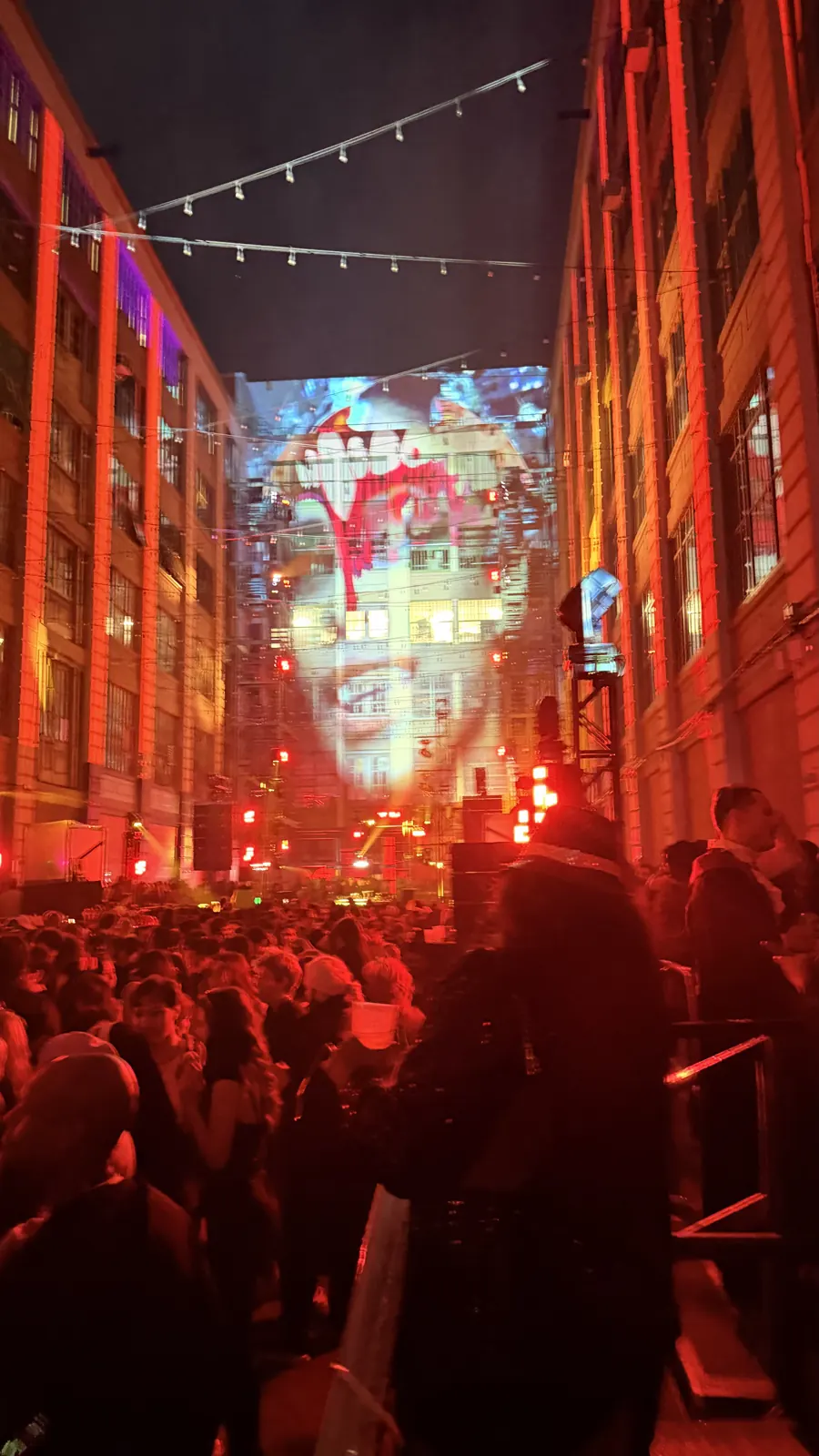
Vampire Ball 2026: Gothic Mischief at Industry City
Inside the October 30 Vampire Ball at Industry City: gothic courtyard scenery, projected façades, costumes, photographs and silent films from Mischief Night.