
Playback Makes Brooklyn a Place to Watch Together
Spike Lee, Clara Wu Tsai and Nicholas Ma bring a new film weekend to BAM, with guest curators whose choices reach far beyond the borough. Here is how to find your way through it.

A festival can make a familiar film unfamiliar again. Change the room, put an unexpected person at the microphone, invite an audience with different reasons for being there, and a movie that seemed settled in memory starts another conversation. That is the appealing proposition behind Playback: The Brooklyn Watch Party, arriving at BAM on November 6 and 7.
Its subject is larger than Brooklyn-made cinema. The inaugural program moves from Spike Lee’s Crooklyn to Algeria, Rio de Janeiro, Accra, Sicily and Bombay, with stops in American basketball and television. Brooklyn supplies the gathering place. The curators supply different routes through the films. Together, they make a useful argument for repertory programming: an older work can be the starting point for a contemporary public occasion.
BAM’s festival overview describes a combination of screenings, neighborhood activity and a free street celebration. The distinction is worth keeping in view while planning. This is a weekend with several forms of participation, rather than a single continuous performance. A visitor can choose one film, build a longer cinema day or spend time at the outdoor party without attempting every screening.
The people making the selections
Clara Wu Tsai and Nicholas Ma created Playback, with Spike Lee as host. Wu Tsai’s work connects professional basketball, arts philanthropy and film production; Ma produced Won’t You Be My Neighbor? and the WNBA documentary Unfinished Business. Their partnership helps explain why this program feels comfortable moving between cinema and other forms of public culture.
The guest curators are Questlove, Bryan Stevenson and John Turturro. They bring notably different professional lives to the same assignment. A musician and filmmaker, a lawyer and social-justice advocate, and an actor and director are being asked to make selections that an audience can encounter together. That is a more interesting organizing principle than a list arranged solely by genre or release date.
The result invites viewers to follow a sensibility. Someone arriving for Questlove can discover a concert documentary alongside a satire about celebrity. Following Stevenson creates a route through films about young lives under extreme pressure. Turturro’s selections place political struggle beside a corrosive comedy of private desire and social convention. The connections are an invitation to interpretation, not a claim that the films say the same thing.
Friday: begin with Crooklyn
The opening night belongs to Crooklyn, Lee’s 1994 film. BAM places the screening in the Howard Gilman Opera House, a different setting from Saturday’s Rose Cinemas program. The announced evening includes introductions by Lee and Ma, a celebratory procession involving the curators and hosts, and a post-screening conversation with Lee, Alfre Woodard, Cinqué Lee, Joie Lee and Zelda Harris.
That return of people connected with the film gives the screening a purpose beyond recognition. A reunion can put the work’s making, its subsequent life and its changing audience into the same room. What the participants will say remains to be heard; the attraction is the opportunity for that exchange, alongside the film itself.
BAM lists a 115-minute running time for the movie, not for the complete opening-night event. Readers arranging a later dinner should allow for the introductions and discussion as well. Tickets begin at $35 before the fees described on the booking page. This is the evening to choose if the main draw is Lee’s filmmaking and a shared opening-night occasion, rather than the ability to sample several different programs.
Saturday morning: politics on the screen
Turturro’s first selection, The Battle of Algiers, is a demanding way to begin. Gillo Pontecorvo’s 1966 film follows the struggle for Algerian independence from France. BAM lists an Arabic- and French-language presentation with English subtitles and a discussion with Turturro afterward; additional guests were still to be announced on its screening page when checked.
The film’s place in this weekend matters. A celebration of a borough can easily become a closed circle of local references. Opening Saturday’s cinema program with a work about anticolonial struggle widens the frame immediately. It asks the audience to enter another city’s history before returning to its own streets.
It also establishes that the word “party” does not mean every selection is light entertainment. Readers choosing for a group should discuss the subjects of the films as well as their starting times. A program that crosses so many moods is best approached deliberately. The strongest choice is the one that people want to watch and discuss, with enough space afterward to do both.
Two very different afternoon conversations
City of God is Stevenson’s afternoon selection. Fernando Meirelles and Kátia Lund’s 2002 film follows young people amid the growth of organized crime in a community near Rio de Janeiro. BAM announces a conversation with Stevenson and guests moderated by Gregg Bishop. The festival’s own program additionally names Stevenson’s brother, Dr. Howard Stevenson, for the discussion.
Stevenson’s role is relevant without making him a substitute for the filmmakers. His work at the Equal Justice Initiative concerns criminal punishment, wrongful conviction and the treatment of children in the justice system. Those concerns give viewers a reason to listen for how a discussion might connect individual choices with the structures surrounding them. They do not predetermine the conclusions of a conversation that has not yet happened.
At almost the same time, Questlove’s The King of Comedy offers another kind of pressure: the desire to become famous. Martin Scorsese’s film stars Robert De Niro as aspiring comedian Rupert Pupkin and Jerry Lewis as the television host he targets. Questlove and Wyatt Cenac are announced for a talkback.
That pairing makes a particularly strong choice for readers interested in performance, broadcasting and the uncomfortable relationship between an audience and a public figure. The premise is dark, and its place in a festival led by recognizable cultural figures creates an additional question to carry into the room: what do viewers expect from the people they watch?
Late afternoon: music or a dangerous marriage
Questlove also introduces Soul to Soul, Denis Sanders’s documentary of the 1971 concert in Accra celebrating Ghana’s independence anniversary. The announced performers in the film include Wilson Pickett, Ike and Tina Turner, Santana, Roberta Flack, the Staple Singers and Ghanaian artists. BAM lists a 96-minute digital presentation.
For a reader following the music, this is the clearest anchor in the schedule. It also provides a way to think about the concert film as a record of an encounter: different musicians sharing a stage in a particular place and political moment. Questlove’s introduction is an added reason to choose this screening, but the historical performance remains the center of the program.
The alternative is Turturro’s Divorce Italian Style. Pietro Germi’s 1961 black comedy follows a Sicilian nobleman who plots against his wife because he cannot legally divorce her. BAM lists a 35mm presentation, in Italian with English subtitles, followed by Turturro in conversation with psychoanalyst Orna Guralnik and writer Jia Tolentino.
Here the format is part of the decision. A reader who especially values seeing a film projected on 35mm has a concrete reason to select it. The discussion offers a different attraction: a comedy about marriage, violence and social permission considered by people whose work approaches human behavior from distinct directions. Neither its comic classification nor the presence of a relationship specialist makes its subject gentle.
Evening: two kinds of ambition
Stevenson’s evening choice is Salaam Bombay!, Mira Nair’s film about a young boy whose attempt to earn money carries him into precarious life in Bombay. Nair is scheduled to join Stevenson after the screening. BAM lists a 35mm print, Hindi dialogue with English subtitles and a 113-minute running time.
For viewers who want a filmmaker’s conversation as part of their weekend, this is one of the most compelling options. Nair’s presence creates the possibility of hearing about the work from its director, while Stevenson offers another perspective on its young protagonist’s circumstances. The screening should be chosen for the film and that announced exchange, without assuming what either participant will address.
Love & Basketball supplies the other evening route. Gina Prince-Bythewood’s feature debut follows two childhood friends whose attachment to basketball becomes entangled with their relationship. The post-screening conversation features cast member Alfre Woodard and the New York Liberty’s Maria Clifton, known as DJ Ria.
This is a particularly natural bridge between the festival’s film and basketball connections. It gives the program a story in which a woman’s athletic ambition is central, and a conversation that brings a performer together with a figure from the Liberty’s public-facing culture. Choose it for that combination of sport, romance and professional aspiration, rather than treating it as a lesser alternative to the more overtly political selections.
A street party between screenings
Playback’s official program places the free street party on Lafayette Avenue outside BAM Rose Cinemas on Saturday from 11 a.m. to 5 p.m. The Soapbox Presents is part of the outdoor program, with local DJs, a bring-your-own-vinyl component, double dutch and work by artist Katie Merz among the announced elements.
The outdoor gathering gives the weekend a social center independent of a particular film. It can be the whole visit or an interval between ticketed programs. That flexibility is useful for a mixed group in which some people want a full day of cinema and others would prefer a shorter neighborhood outing.
The schedule also forces choices. The afternoon screenings begin at 1:45 and 2 p.m.; the late-afternoon options begin at 4:45 and 4:50 p.m.; and the evening films start at 7:30 and 8 p.m. Those are alternatives, not a sequence a single viewer can complete. Discussions extend beyond film runtimes, so avoid planning a tight transfer based only on the length of a movie.
Build a day around one strong choice
Start with the screening that matters most, then decide whether to add another. A single film with a substantial discussion may be a more satisfying outing than a rushed attempt to maximize the number of titles. Check the individual BAM page for the venue, presentation format, access information and current ticket inventory. Friday’s opera-house event and Saturday’s cinema screenings have different fee descriptions; a starting price is not the final checkout total.
For a first visit, the most useful question is simple: which conversation would you want to continue afterward? Cinema offers the shared object, and Playback adds the people and setting that can keep it alive beyond the credits. The films span decades and continents. The chance to watch them with a Brooklyn audience, then take those differences back onto Lafayette Avenue, is what makes this particular weekend worth considering.
Keep reading

Galas · New York
Art With Purpose: Angels Helpers Brings Artists Together at the Harmonie Club
Alisa Roever’s October 23 gala at the Harmonie Club brought together a Ross Pino-curated art auction and a Valerian Hughes fashion presentation for children’s arts and education.
Save the dates
Playback Makes a Weekend of Watching Together
Time unconfirmed: saved as an all-day event. Calendar save only; book admission separately.

New York · Sports & Society
At Hudson Yards, Padel Makes a Play for the Social Evening
A September gathering at Reserve put guests on court and sponsors on the sidelines. It offered a small, revealing example of a sport being sold as a place to belong.
Sport & Society · Washington, D.C.
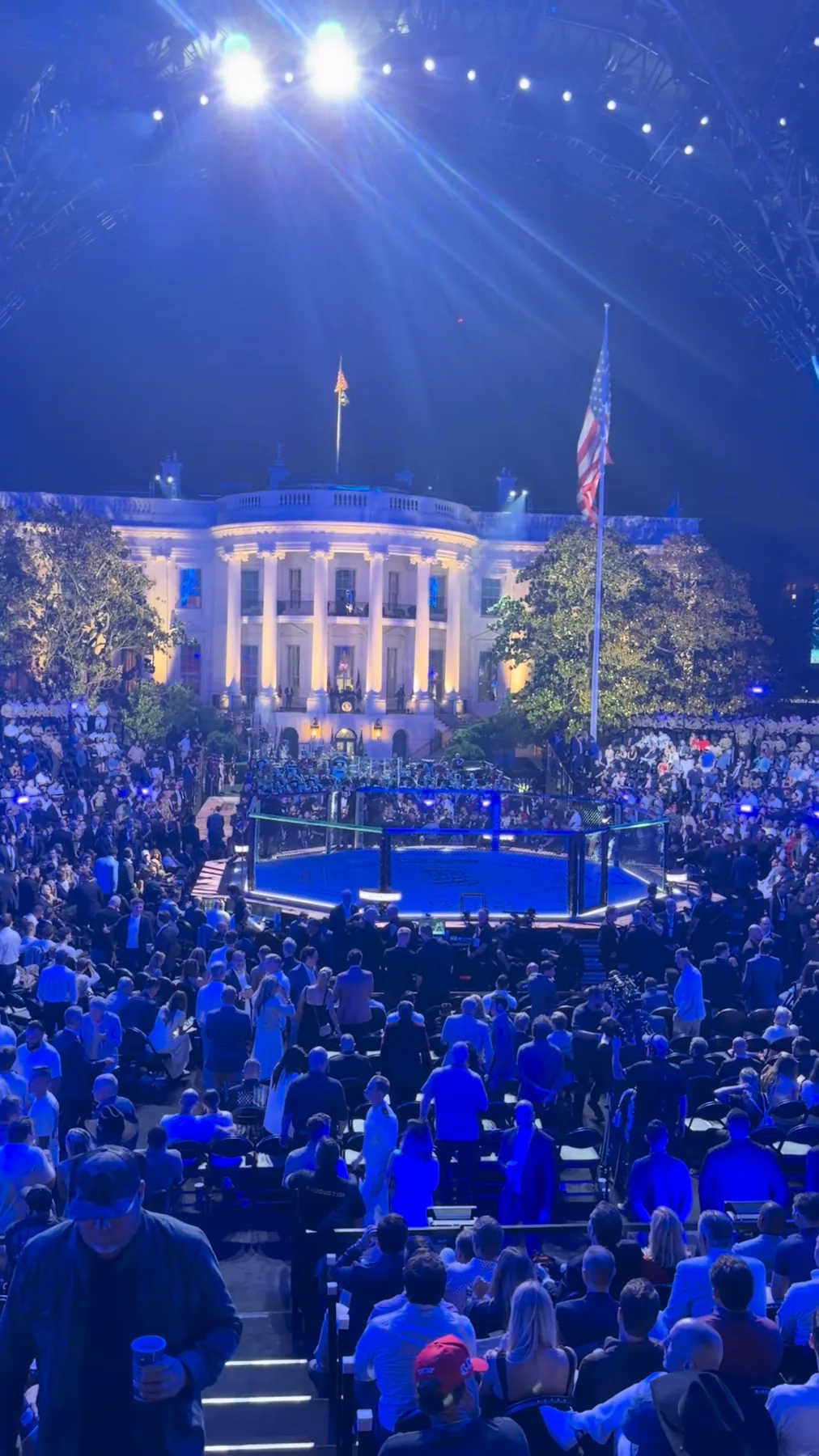
Ringside at the White House: My First UFC Night
David Shusterman reports from UFC Freedom 250 on the White House South Lawn: a fourth-row view, a remarkable crowd and a final moment inside the Octagon.