
Michael Chow, Seen by His Friends
A small Gagosian exhibition brings an unusually personal collection to New York—and offers a way to look beyond the familiar mythology of the art-world restaurant.

Restaurants disappear at the end of an evening. Their rooms remain, but the arrangement of people, conversations and occasions cannot be put back exactly as it was. A portrait offers a different kind of continuity. It holds a particular encounter in a form that can move from a dining room to a gallery and meet an audience that was never present at the table.
That is the promising territory of Friends and Legends: The Collection of Michael Chow. The exhibition brings together eleven works from a collection assembled over six decades, with New York dates of November 14 through December 22. The scale is modest enough to encourage attention to individual objects. The names are large enough to make that attention easy to lose in recognition alone.
Gagosian’s announcement lists portraits by Jean-Michel Basquiat, Peter Blake, Urs Fischer, Keith Haring, David Hockney, Ed Ruscha, Julian Schnabel and Andy Warhol. Many of the works have been displayed in Mr Chow restaurants. In a gallery, they can be considered together as differing responses to the same person, rather than as part of a room’s atmosphere.
More than a famous restaurant name
Michael Chow’s own account of his life begins in Shanghai, where he was born in 1939 into a theatrical family. His father, Zhou Xinfang, was a major figure in Beijing opera. Chow moved to England as a boy and studied art and architecture before opening the first Mr Chow in London’s Knightsbridge on Valentine’s Day in 1968.
Those beginnings help explain why the restaurant has always been only one part of his creative identity. Design, performance, food and painting were not unrelated interests that happened to accumulate around a businessman. In his telling, the restaurant became a way to bring them into one setting and to present Chinese culture to a Western audience.
The distinction is useful when approaching the exhibition. A collection of portraits of a restaurateur can be read as a record of celebrity. It can also be read as an exchange among people concerned with making images, shaping rooms and constructing public identities. The second reading leaves more room for the works themselves.
The restaurant’s official biography documents Chow’s early work in design as well as his later role in hospitality. Before the London restaurant, he designed the Smith and Hawes hair salon in 1965. That detail places his interest in the social life of an interior before the restaurant brand became internationally recognizable. He was already thinking about how a designed space could establish a distinctive experience.
A collection organized around a person
A portrait collection has a different structure from a survey of a movement. The sitter supplies continuity, while the artists supply variation. Changes in medium, scale and approach can become unusually legible because the viewer is not starting from an entirely new subject each time.
Here, the relationship between subject and collector complicates the arrangement further. Chow is both the person depicted and the person who has lived with these works. The collection records how artists saw him, but it also records his willingness to commission, acquire and keep those responses. The exhibition therefore offers two kinds of authorship: the artist’s decisions within each work and the collector’s decisions about the group.
Neither should be reduced to a simple story of flattering likenesses. A portrait may depend on a face, a name, an emblem or a joke. It may make a sitter recognizable while transforming almost everything about the way that recognition occurs. The useful question is not only whether a work looks like Michael Chow. It is what the artist has decided will stand for him.
Read the materials as carefully as the names
The Beverly Hills presentation, which precedes New York from November 4 through 7, provides several specific examples. Hockney’s Portrait of Michael Chow from 1969 is a colored-pencil drawing on paper. Ruscha’s Mr. Chow L.A. from 1973 uses organic substances on canvas. Haring’s Mr. Chow as Green Prawns in a Bowl of Noodles from 1986 is made with acrylic and metallic paint on tarpaulin.
The listed Warhol portrait, dated 1981, combines acrylic, silkscreen ink and diamond dust across two canvas panels. Basquiat’s Untitled from 1985 uses acrylic and oil stick. Even before seeing the exhibition, those material differences establish that it will not be a row of interchangeable images.
The shift from a small drawing to a large tarpaulin changes the physical terms of looking. A work on paper can invite close concentration; a larger support can establish a more bodily relationship with the viewer. Those are reasons to experience the objects at their actual scale, while reserving judgments about the installation until it opens.
Hockney and the sustained attention of portraiture
The National Portrait Gallery’s account of David Hockney’s drawings emphasizes repeated encounters with people close to him. Friends, family and collaborators recur across different materials and periods. Their changing appearances become part of the work, as does the artist’s changing way of representing them.
That context is useful for the 1969 Chow drawing. The significance of a portrait does not depend only on the sitter’s public standing. It can also lie in the attention one person gives another and in the decisions required to put that attention on paper. A line is not a neutral record; it selects, emphasizes and leaves things out.
In a group exhibition, the temptation is to move rapidly from one famous signature to the next. Hockney’s place here suggests the opposite pace. Give the drawing enough time to establish its own scale and rhythm before comparing it with the larger works. Familiarity with the name should begin the looking, not complete it.
Warhol: the portrait as a public image
Warhol’s commissioned portraits belonged to a much larger practice. The Andy Warhol Museum describes a process that began with Polaroid photographs, moved through painted color and then transferred a photographic image by silkscreen. The commissions became an important source of income during the 1970s.
That process placed the individual sitter inside a recognizable visual system. It could give a portrait both personal specificity and the repeatable force of an image designed for circulation. For a restaurateur whose name had become the identity of a business, that tension between person and public image is particularly relevant.
The Warhol Foundation’s photographic archive also situates the portrait photographs within a much broader record of his surroundings. Polaroids were working material, while other photographs documented social life. The boundary between a person encountered socially and a person transformed into an artwork was therefore part of the practice itself.
Chow’s portraits belong within that history, but should still be approached as particular works. The existence of a familiar method does not erase differences in color, pose, surface or the relationship between panels. Those are the choices through which an identifiable image becomes an individual object.
Haring, Basquiat and a wider city
Keith Haring’s foundation biography places his early New York work in a cultural network extending beyond galleries: subway stations, clubs, streets and performance spaces. His chalk drawings on unused advertising panels reached commuters directly. The later Pop Shop made another kind of contact between art and everyday commerce.
That history prevents the restaurant connection from becoming the whole account of Haring’s world. His practice moved through many kinds of public and social space. The title of his Chow portrait makes a culinary association explicit, but the work sits within a career concerned with how images travel and whom they reach.
Basquiat’s biography similarly connects painting with words, music and the downtown environment. His use of salvaged materials and his movement between drawing and painting are part of that history. In this collection, his presence brings another vocabulary to the same recurring subject.
The point is not to turn every artist into evidence for a single legend about nightlife. Their practices differed, and the works should retain those differences. A restaurant can be a place of exchange without being the explanation for everything that its patrons made. The exhibition becomes more interesting when the social connection opens a route into the art rather than standing in for it.
Chow on the other side of the canvas
Chow’s own painting career changes the meaning of his role as a sitter. In 2016, The Andy Warhol Museum presented Voice for My Father, his first solo exhibition in the United States. It combined his paintings, photographs of Zhou Xinfang and portraits of Chow by other artists.
That earlier exhibition placed three forms of representation together: a father’s theatrical life, a son’s paintings and other artists’ images of the son. The current collection exhibition has a narrower scope, but the earlier project provides a useful reminder that Chow is not merely the passive subject of these encounters.
The account of his Bridges exhibition, presented in London in 2022–23, describes a physically expansive process involving layers of household paint and found materials. It also traces his return to painting after years devoted to restaurants. These paintings are not the announced subject of Friends and Legends, so they should not be expected on its walls. They matter as context for the collector’s own investment in making things.
In Carnegie Museums’ 2016 profile, Chow discussed the difficulty of being recognized as a painter after becoming so well known as a restaurateur. That tension remains a useful way into this show. Public identities can make people legible while also narrowing what others are prepared to see. A group of portraits by different hands offers one way to resist a single, settled image.
New York dates and the right address
The New York exhibition opens November 14, with a publicly announced reception from 6 to 8 p.m., and continues through December 22. Gagosian identifies the venue as 980 Madison at 76th Street, while giving its street address as 974 Madison Avenue, New York, NY 10075. Use the exhibition’s official location link when navigating. The listed regular hours are Tuesday through Saturday, 10 a.m. to 7 p.m.; check the gallery before a holiday-period visit.
The show can be paired thematically with The Circuit Report’s [look at New York dining rooms including Mr Chow](/articles/new-york-restaurants-zuma-tao-mr-chow-philippe/), though a restaurant reservation and a gallery visit are separate arrangements. The useful connection is cultural rather than logistical: one considers the designed social experience, while the other allows the portraits to become the main event.
Eleven works is enough for a concentrated visit. Begin with one object, compare it with a second and notice what changes when the sitter remains the same. The familiar restaurant name may bring readers through the door. The more rewarding encounter is with the differences among the people who chose to picture the man behind it.
Keep reading
Arts & Culture · Beverly Hills
Richard Avedon and the Work of Being Seen
Gagosian’s Beverly Hills exhibition brings Hollywood’s faces together. The more interesting subject is the negotiation behind the portrait.
Save the dates
Michael Chow, Seen by His Friends
Time unconfirmed: saved as an all-day event. Calendar save only; book admission separately.
Sport & Society · Washington, D.C.
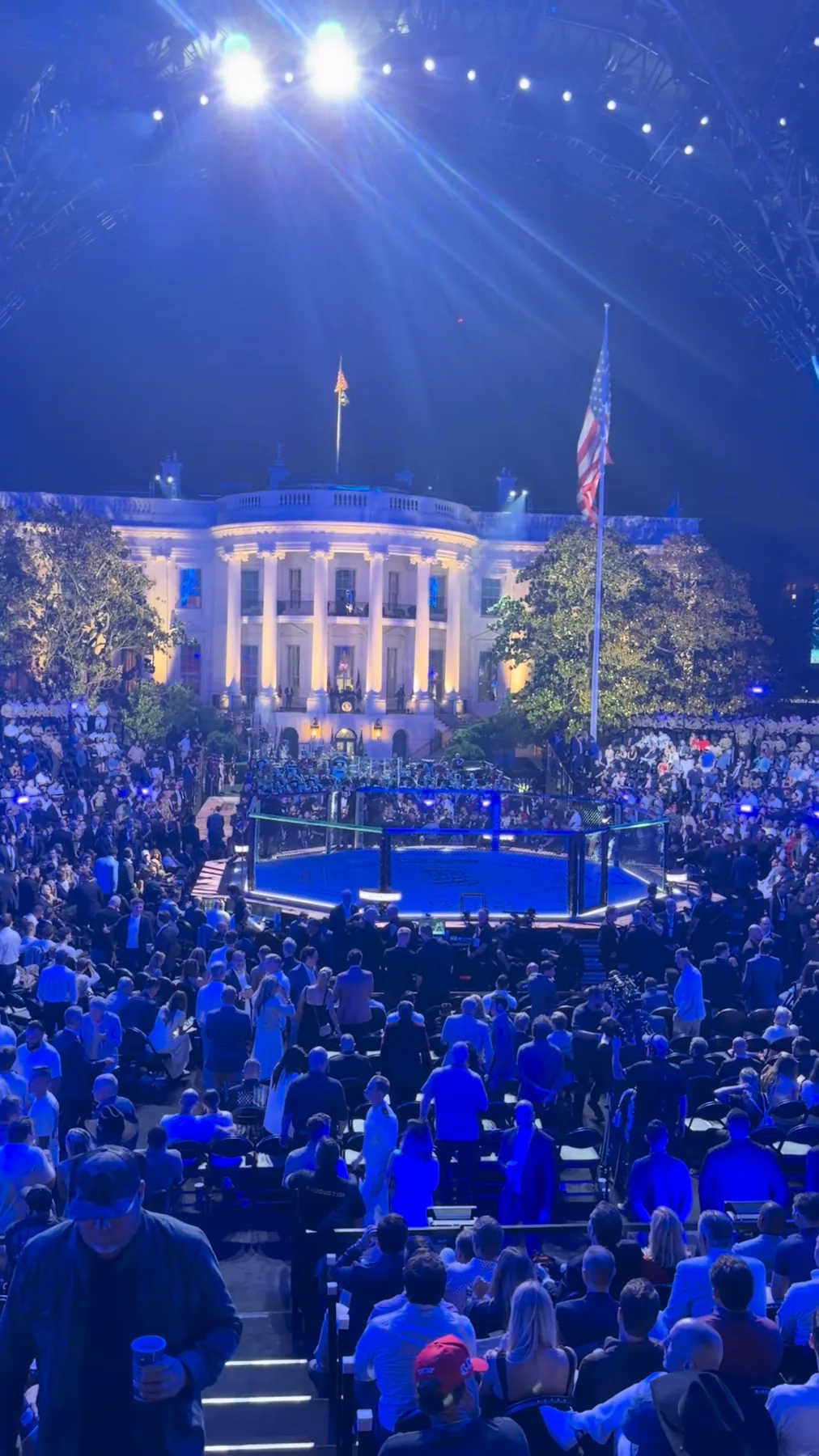
Ringside at the White House: My First UFC Night
David Shusterman reports from UFC Freedom 250 on the White House South Lawn: a fourth-row view, a remarkable crowd and a final moment inside the Octagon.

Arts & Culture · New York
The Rockettes Bring Their Footwork Into Focus
A new tap number and live stage-camera views give returning audiences something specific to watch for this season.