
Grace Coddington’s Front Row, on Paper
An illustrated Smythson diary, a new Madison Avenue address and the continuing value of a fashion editor’s personal record.

A fashion diary is a practical object with an unusually suggestive name. It can hold appointments, flights and show times, but it can also become a record of what its owner noticed between them. The calendar supplies the structure; the handwriting makes it particular. In Grace Coddington’s collaboration with Smythson, that distinction becomes the point of the object.
The anniversary collection marks 30 years of Smythson’s Fashion Diary with a 2027 edition and coordinating correspondence cards. Coddington’s illustrated front row wraps around the diary’s cover. Inside, her recommendations join its fashion-capital listings. It is a small-scale extension of a career spent giving clothes, people and settings a narrative relationship.
The timing brings several strands together: a new Smythson store on Madison Avenue, a completed launch celebration, and a new volume of Coddington’s fashion work. The interesting story is not simply that a recognizable name has been attached to stationery. It is how a professional habit—keeping, drawing, selecting and returning to records—can become visible in an everyday object.
An editor’s work, in another format
Grace Coddington’s publisher biography traces a career from modeling to British Vogue in 1968, a move to Calvin Klein in New York in 1987, and American Vogue the following year. She served as the magazine’s creative director until 2016, then continued as an independent creative.
That background matters because fashion editing involves more than identifying attractive clothes. An editorial image brings together garments, a body, a setting, a photographer’s approach and an intended sequence. The result may look spontaneous, but its coherence depends on choices made before and around the exposure.
A diary works at the opposite end of that scale. Its pages do not require a production team, and most of what is written there will never become public. Yet selection remains central. An address is kept because it mattered; a detail is drawn because it caught attention; an appointment becomes a memory because something beside its time was recorded.
The collaboration is strongest when considered through that continuity. It translates an editor’s attention into an object that another person can use, while leaving the contents of that person’s year unwritten.
The front row becomes an illustration
Smythson’s conversation with Coddington explains the cover’s conceit: animals occupy the front row in place of editors. The drawing continues around the back. The same conversation describes her longstanding use of paper diaries and her practice of keeping earlier volumes and returning to them.
The joke works because a fashion audience is already a performance. Seating, posture and the act of looking all carry meaning. Replacing the people with animals preserves the recognizable arrangement while loosening its solemnity. It gives a status-conscious scene an affectionate visual interruption.
Illustration is well suited to that move. A drawing can compress a social observation without documenting a literal guest list. It need not identify a particular event or claim that a pictured scene occurred. Its authority comes from the intelligence of the idea and the character of the line.
For the owner of the diary, the image is also encountered repeatedly. It must survive more than the first glance of a campaign photograph. A cover carried through a year becomes familiar, and that familiarity changes the way its humor is received. A useful design can make repetition a pleasure rather than rely entirely on novelty.
A fashion map with a point of view
The Fashion Diary’s established geography is New York, London, Paris and Milan. Recommendations turn those cities from a sequence of destinations into a set of choices. Coddington’s additions place a personal preference alongside the practical calendar.
That is a different kind of travel information from an exhaustive directory. A list becomes interesting when the reader understands the sensibility behind it. It cannot guarantee that every address will suit every traveler, but it can explain why one person returns to particular places.
The same standard should apply to any editorial recommendation. Specificity is more valuable than a claim that something is universally essential. A shop, restaurant or cultural stop earns its place by contributing to the itinerary, not merely by being fashionable. A short selection with a discernible perspective can be more useful than a long list whose only organizing principle is prestige.
A printed recommendation also has a different relationship to time. Hours change, businesses move and reservations become unavailable. The page can preserve the recommendation while a current official source supplies the practical check. Keeping those functions distinct lets paper remain useful without pretending that it updates itself.
A new address on Madison Avenue
Smythson’s official stories index identifies its new New York address as 575 Madison Avenue. The brand’s October announcement presented the Coddington edition alongside the opening of that store. The address is a retail destination, not a standing invitation to a signing or private gathering.
The PR Net’s published account of the launch describes a completed book-signing celebration bringing together Coddington’s professional circle and friends. That provides context for the collaboration’s introduction. It does not make the event repeatable for a later visitor, nor does a photograph of a signed volume establish current availability of signed stock.
A store visit has a more ordinary and potentially useful purpose. A paper object can be assessed at the scale of the hand: how it opens, how much space a page provides, whether its dimensions suit a bag and whether its layout matches the way its owner actually records a day.
Those questions are difficult to answer from a styled product photograph. For a purchase intended to accompany a full year, they deserve at least as much attention as the cover. A beautiful diary that is inconvenient to carry or uncomfortable to write in will quickly become a different sort of object: one admired more often than used.
The long history behind a portable book
The Smythson Story dates Frank Smythson’s first Bond Street boutique to 1887. Its archive narrative places the first Panama diary in 1908. The brand’s separate account of that design emphasizes portability, thin paper and a flexible binding intended for life on the move.
The useful historical point is not that a modern reader must accept every claim of priority in a luxury house’s own account. It is that portability was a design problem. A book needed enough pages to organize a year while remaining small and flexible enough to accompany its owner.
That problem has not disappeared, even though a phone can hold far more information. A paper diary makes its limits physical. There is a finite page, a particular scale of handwriting and a visible sequence of days. Those constraints can be inconvenient, but they also give the record a shape.
A page can hold a crossed-out plan beside what actually happened. It can preserve the pressure of a pen, a sketch made in a margin or a name added later. None of those qualities proves that paper is superior to a digital calendar. They explain why the two can serve different purposes.
Craft that can be described
Luxury becomes more meaningful when its claims can be connected to particular work. Smythson’s Meet the Makers account describes its Wiltshire stationery production through the people and processes involved: printing, cutting, gilding and lining envelopes by hand. The account names head of bespoke production Brad Hillcoat and production operators Josh Uzzell and Lian Luis.
That is more informative than the word craftsmanship on its own. It tells a reader that a finished piece contains successive operations and that skills can overlap within a workshop. The anniversary correspondence cards make sense within this broader stationery practice, while the specific manufacture of any individual product should be checked against its own description.
The distinction matters because a brand’s range may include different materials and production arrangements. A story about one workshop is not automatically a technical specification for every item carrying the name. Examine the object in front of you: paper, printing, binding, edge finish and the way separate elements meet.
A high price does not remove the need for that examination. If anything, it makes precise description more valuable. The pleasure of a well-made object should be available to scrutiny, not protected by vague language.
Choosing a diary for the life you have
Smythson’s diary guide distinguishes week-to-view layouts from day-per-page formats and pocket, mid-size and desk proportions. Its Panama leather is described as cross-grained and flexible. Those are practical distinctions a reader can use without adopting the brand’s preferred vocabulary for luxury.
Begin with the amount you write. A crowded day of appointments requires a different page from a few reminders and a paragraph of reflection. Consider whether the diary will travel, remain at a desk or move between both. A larger writing area is useful only if the book is present when needed.
Then consider the writing instrument and the page itself. If possible, assess a representative sample rather than assuming every ink and pen will behave identically. Paper preference is personal: some writers want a very smooth surface, others more resistance. The important standard is whether the combination supports your habit.
A collaboration should survive these ordinary questions. Its illustration may be the reason to look, but its format is what determines whether the object becomes part of daily life. That is not a reduction of design to utility; it is the meeting point where a designed object becomes someone’s possession.
A companion book, with a different purpose
Phaidon’s Grace: Now brings together work from Coddington’s independent creative period. The publisher describes collaborations with thirteen photographers and editorial images accompanied by commentary and sketches. Its listed shipping date is November 5, 2026.
The book and the diary invite opposite directions of attention. One gathers a body of completed work; the other supplies space for a year that has not yet happened. Seen together, they make the relationship between an archive and a working habit unusually clear.
A portfolio allows a reader to study sequence, recurrence and change. Rather than treating it as a parade of recognizable faces, look at the connections between images: how clothes participate in a story, how a setting establishes tone and how different photographers respond to an editorial idea. The credits are part of that reading.
The diary offers a smaller exercise in the same discipline. Record what you noticed, not only where you went. A sentence about why a room worked, a quick drawing of a silhouette or the name of a photographer whose image held your attention can make the page useful long after the appointment has passed.
Availability is separate from appeal
The collection’s stock position varies by market and retailer. The Smythson regional pages checked for this story displayed sold-out notices, while a separate retailer listing offered the diary at a different market price. Neither observation should be treated as a permanent statement about the New York store’s inventory.
Use the official collection and current store information to establish the exact edition, availability and total cost before making a trip specifically to buy it. The 2027 date is part of the product’s function, not an incidental label. An earlier fashion diary, a notebook and a signed collector’s copy are not interchangeable purchases.
There is no need to turn uncertain stock into artificial urgency. The editorial interest in Coddington’s drawings and working practice remains even when a particular object cannot immediately be bought. A good design story can inform a reader’s eye without requiring a transaction at its conclusion.
The year after the year
The most persuasive argument for a diary may be what happens when it stops being current. Appointments lose their urgency, but their arrangement can reveal the shape of a period: journeys, recurring commitments, a project that occupied more time than expected, an address that became important.
Coddington’s collaboration gives that future record a distinctive cover. Its deeper appeal lies in the invitation to fill the pages with something worth returning to. An illustrated front row is the beginning; the year belongs to whoever carries it.
Keep reading

Art & Culture · Miami Beach
INK Miami at 20: Why Works on Paper Deserve Their Own Art Week Visit
The fair returns to the Dorchester December 2–6 with free admission and a focus on prints and editions. Its scale offers a different way to look—and a reason to ask more of the label.

Galas & Society · Palm Beach
The Princess Grace Awards Gala 2027: Monaco's Royal Arts Night Comes to The Breakers
On Saturday, January 30, 2027, the Princess Grace Foundation-USA brings its awards gala to Palm Beach for the first time, with Prince Albert II of Monaco in attendance to celebrate a new class of…
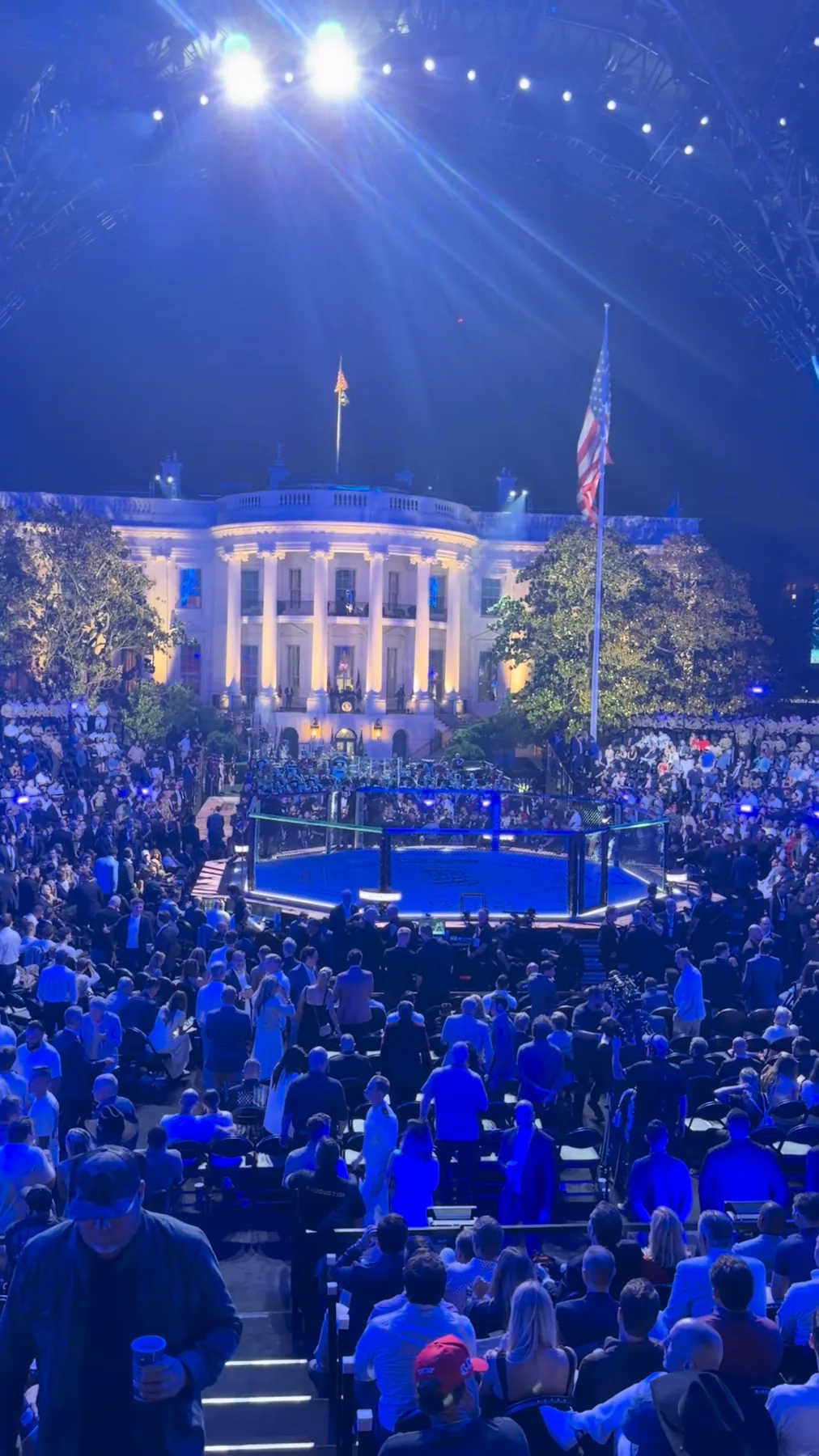
Sport & Society · Washington, D.C.
Ringside at the White House: My First UFC Night
David Shusterman reports from UFC Freedom 250 on the White House South Lawn: a fourth-row view, a remarkable crowd and a final moment inside the Octagon.