
One Times Square, Beyond Midnight
The Ball Experience turns a once-a-year television image into a year-round encounter with design, city history and the machinery of a shared celebration.

For most people, One Times Square is a place seen in a very particular way: from a distance, at night, with a countdown already under way. The building becomes a support for an image. Its surroundings fill the screen, the final seconds pass, and attention moves elsewhere. A year-round visit reverses that relationship. There is time to consider the object, the building and the unusual civic ritual that joins them.
The current Ball Experience brings visitors close to the New Year’s Eve Ball and combines that encounter with a viewing deck and interpretive attractions. It is a different proposition from joining the December 31 crowd. Its strongest potential is not a claim to reproduce that night, but the opportunity to examine something usually consumed as a few seconds of spectacle.
That distinction should guide both the visit and the purchase. Someone principally interested in an elevated view of Times Square may need a different ticket from someone who wants to stand near the Ball. Someone planning New Year’s Eve needs a separate set of information altogether. The same address can support several experiences without making their access interchangeable.
First, choose the experience you mean
The operator’s current ticket page lists the Ball Experience at a base price of $155 plus tax. It includes an up-close Ball photo opportunity, the official Ball Show, Skywalk, Times Travel and Eternal Midnight. A separate Skywalk ticket is listed at a limited $25 plus tax through November 22, 2026, against a regular listed price of $44. Ball access is an additional purchase for Skywalk visitors, subject to the operator’s arrangements.
Those prices describe the offers displayed when this guide was checked, not a promise about every date or future promotion. The useful decision is the difference between the products. If the Ball is the reason for going, select a ticket that expressly includes it. If the goal is the view, compare the Skywalk offer on its own merits before adding experiences you may not need.
A named attraction bundle can conceal more than it explains when read too quickly. Take a moment to identify the included stops and the timed entry you are purchasing. Add-ons, taxes and any selected upgrades belong in the comparison with other city outings. The base price is the beginning of that calculation, not the final receipt.
An object with a changing design
The Ball is not a single unaltered relic that has survived from 1907. Successive versions have changed its materials, scale and lighting. The current Constellation Ball, unveiled in November 2025, is the ninth version. The official Ball facts give its diameter as 12.5 feet, its weight as 12,350 pounds and its crystal count as 5,280.
The crystals are circular, replacing the triangular form associated with the preceding design. Programmable LED lighting and audio-responsive capabilities make the structure a system as well as an ornament. Those details are worth knowing before seeing it: a distant television image can flatten both the physical engineering and the decisions made at the scale of a single component.
Look for the relationship between repetition and the whole. A crystal has an individual cut and outline, but thousands must function together as a recognizable surface. Light must read at close range and across a square. The object has to withstand the disparity between the visitor’s photograph and the broadcast image through which most of the world encounters it.
That is a useful way to approach spectacular design generally. Ask what changes when an object is made to be seen by a crowd, through a camera and at a distance. The Ball belongs to all three conditions.
Before New York, a practical signal
A descending ball was once a means of communicating time with practical consequences. Royal Museums Greenwich dates the Greenwich Time Ball’s first use to 1833. Its visible signal helped ships on the Thames check their marine chronometers. The object remains part of the Royal Observatory’s public identity.
This earlier history gives the New York ceremony a surprisingly useful frame. The form makes a moment legible to people who cannot all stand beside the same clock. A ball moves; observers agree that the movement means something. What changes between maritime timekeeping and New Year’s Eve is the purpose of that agreement.
At Greenwich, accuracy served navigation. In Times Square, the shared signal organizes celebration. The city does not need the Ball to tell residents what time it is. Phones and watches can do that. Its continuing value lies in the public act of recognizing the instant together.
The distinction helps explain why the ceremony can remain compelling in an era of individually precise devices. A private screen supplies information. A civic ritual supplies a common occasion. The practical technology can become obsolete while the social form retains its force.
The newspaper tower and the first descent
The official history of Times Square’s New Year celebration connects the early festivities to the arrival of The New York Times and the changing identity of the district. The first celebration at the tower took place in 1904. The first Ball descent followed in 1907, marking the arrival of 1908.
That first object was made of iron and wood, weighed 700 pounds and carried 100 electric bulbs. Its scale was modest beside the present structure, but the basic visual proposition was already established: an illuminated object, high above a crowd, moving toward a precise shared moment.
The history is a reminder that civic traditions are made. They begin with choices about a location, a technology, a sponsor and an audience. Repetition can eventually make those choices feel inevitable. A visit to the building is an opportunity to recover some of the contingency behind the familiar picture.
It also places the Ball within the history of publicity. The newspaper building and the public celebration reinforced one another. A commercial address acquired a ceremonial function, while a crowded district gained an image that could travel far beyond its streets. That relationship between commerce and collective experience remains central to Times Square.
A viewing deck inside the visual field
One Times Square’s Skywalk offers a 360-degree view from the building. The operator’s April 2026 launch announcement describes the deck at 19 floors above the district, with glass elements and views extending across Manhattan.
Its location gives the experience a different emphasis from an observation deck chosen principally for altitude. The interest here is the density of Times Square: the relationship between the street, surrounding towers, signs and the place from which the annual countdown is staged. Height is one variable; proximity to a particular urban scene is another.
Approach the view as a sequence rather than a single photograph. Look down to understand the shape of the streets, outward to find the district’s place in Manhattan, and back toward the building’s own role in the composition. A location so often used as a backdrop can become the subject.
Weather and light will affect that encounter. A daytime visit makes the city’s physical arrangement easier to study; darkness shifts attention toward illumination. These are different visual possibilities, not guarantees of a particular sunset, visibility level or photograph. Choose the time that fits your interest and the available operating schedule.
History as part of the ticket
Times Travel and Eternal Midnight sit within the larger Ball Experience offering. The operator presents the former as an interactive journey through the district’s history and the latter as part of its celebration-focused experience. Treat those descriptions as an outline of the program rather than as a substitute for your own response to the installation.
Interpretive attractions face an interesting challenge at this address. Times Square already provides an unusually dense sensory environment outside. An interior experience must decide whether to intensify that atmosphere or create enough distance for a visitor to understand it. The most rewarding approach is to keep both possibilities in mind: enjoy the staging, then ask what it has helped you notice about the actual city.
Historic objects are particularly useful anchors. They interrupt the smoothness of a story told entirely through screens and give technological change a physical scale. An earlier lighting system or a smaller Ball can make an abstract century of development visible in a way that a date alone cannot.
The visit need not become a technical seminar. A few precise questions are enough. What has changed? What has remained recognizable? Which parts of the tradition depend on the object, and which depend on the audience? Those questions can make a familiar attraction feel less pre-digested.
Plan the ordinary details carefully
The operator’s visit information places the attraction at 1475 Broadway and uses timed admission. Check the current schedule for the experience you intend to purchase. Do not assume that every component operates on identical hours or that an unrelated event in the building includes access to the Ball.
The location is served by several major subway connections. The operator lists Times Square–42nd Street, the Port Authority connection and Bryant Park among nearby options. Choose the station and exit that suit your route, then allow for the final walk through a crowded district. A short distance on a map can take longer when pavements are busy.
For visitors with mobility, sensory or other access requirements, consult the attraction’s current access and entry information before paying. A broad statement about a building does not answer every question about a particular deck, timed sequence or installation. Resolve the requirements that matter to your party in advance.
Keep the rest of the day flexible enough to enjoy the visit. A timed attraction between two tightly scheduled commitments can turn the experience into a logistical test. A nearby meal or theatre performance can make a satisfying pairing, provided the interval leaves room for entry procedures and an unhurried departure.
The photograph and the experience
An up-close photograph is part of the Ball Experience’s appeal. It is also worth considering what you want the photograph to remember. A picture that includes some of the object’s scale or its relation to a person may say more than a close crop of sparkle alone.
Follow the venue’s actual photography rules, including any restrictions on equipment or particular spaces. Personal souvenir photography and commercial production are different uses; a ticket description should not be stretched into permission for a professional shoot. The public promise of a photo opportunity is useful precisely because it is specific.
Once the image is made, give the object a little time without a screen between you and it. Look at its construction, the transitions of light and the gap between what appears substantial close up and what becomes graphic at a distance. An attraction organized around an iconic image can still reward direct observation.
That habit carries beyond this address. The most memorable city visits often involve a moment when the familiar photograph stops being sufficient and the physical place begins to supply information of its own.
Keep December 31 separate
A regular Ball Experience ticket is not evidence of admission to the New Year’s Eve street celebration, a private viewing party or a December 31 hospitality package. Those arrangements have their own dates, entrances, restrictions and booking terms. Proximity to the Ball during a daytime attraction does not establish what a visitor can see from a different venue at midnight.
For that separate decision, use our [Times Square New Year’s Eve viewing-party guide](/articles/times-square-new-years-eve-2027-viewing-parties/) alongside the exact current offer from the venue you are considering. A rooftop view, an indoor party and a direct sightline to the descent are different claims. Ask the purchase page to substantiate the one that matters to you.
The year-round attraction has a clear identity without borrowing promises from the holiday. It gives an ordinary day access to an extraordinary object, and time to consider the city around it. The best reason to go is the chance to look more carefully at something the world usually watches in a hurry.
Keep reading

Galas & Society · Palm Beach
Beyond the Blue Line Gala 2027: A New Palm Beach Evening for the Families of Fallen Officers
On March 26, The McDavid Group Charities brings its inaugural gala to The Mar-a-Lago Club, with dinner, a live auction and tributes supporting the children and spouses of law enforcement officers…

Music · Miami
Beyond the main stage: Duetti’s Latin Music Week night at Dante’s HiFi
MUTIS and RAKA are advertised for an October 19 evening in Wynwood. Here is the setting, the schedule and the RSVP conditions to know before going.
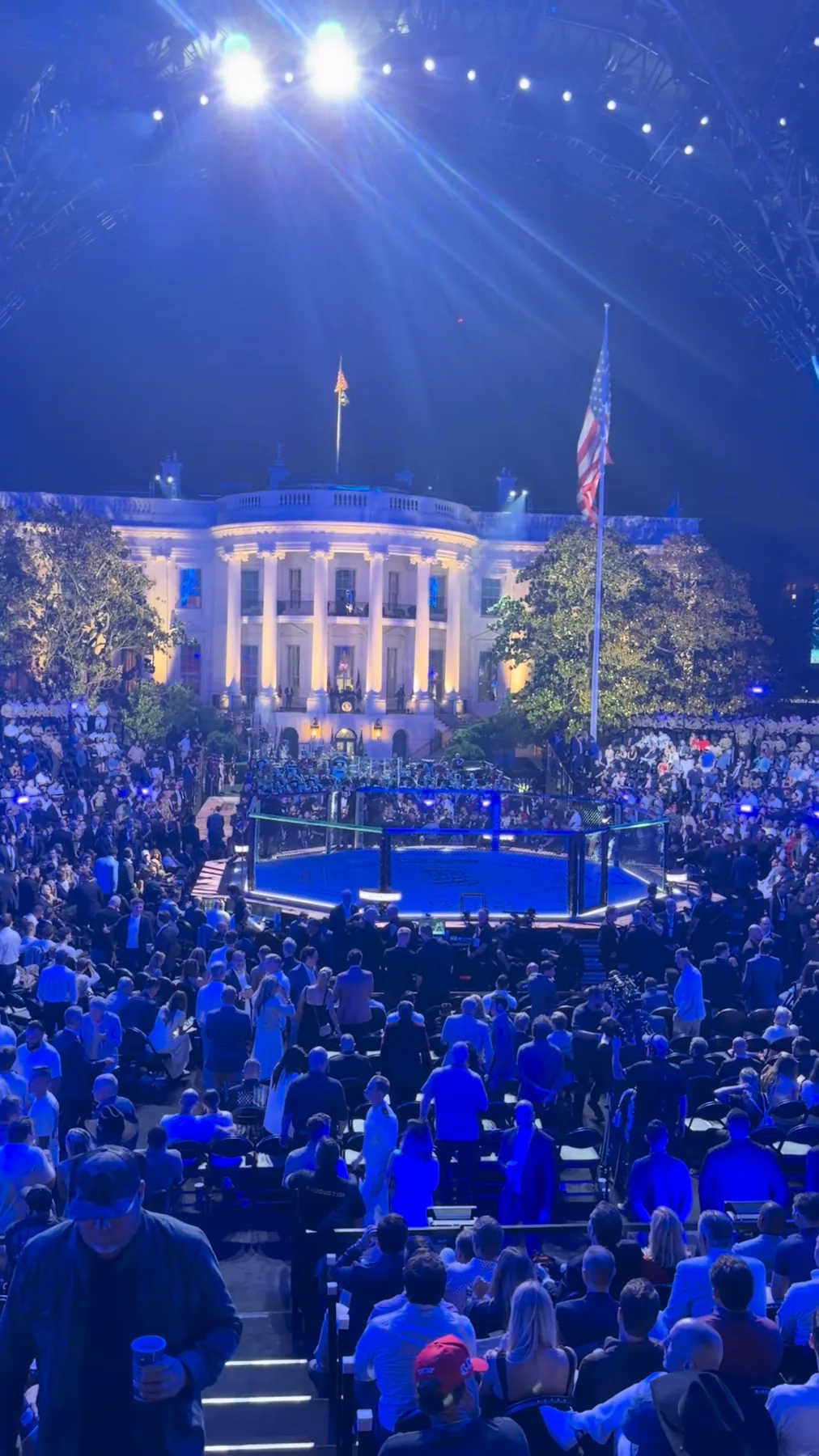
Sport & Society · Washington, D.C.
Ringside at the White House: My First UFC Night
David Shusterman reports from UFC Freedom 250 on the White House South Lawn: a fourth-row view, a remarkable crowd and a final moment inside the Octagon.