
Las Olas Looks Both Ways
With Caviar Club’s steakhouse ambition and Ivy’s planned New River opening, Fort Lauderdale’s dining story is also a story about how the city uses its past.

Two restaurant names point toward different versions of a Fort Lauderdale evening. Caviar Club announces indulgence before a menu is opened. Ivy’s invokes a person whose history belongs to the city. One looks toward the theatrical luxury of a dinner that becomes a late night; the other is being developed around waterfront hospitality and a local namesake.
They should not be collapsed into a single list of places to book tonight. Caviar Club has been announced as an October opening and links to reservations, although its own landing page still carries coming-soon language. Ivy’s is targeting early 2027. That difference is important to anyone making plans, and it gives this story its shape: a look at the concepts entering the boulevard, the people behind them and the downtown setting that makes them more than isolated dining rooms.
Each project proposes a different addition to the boulevard, with opportunities to build an evening around Fort Lauderdale’s history, museums and waterfront as well as dinner.
Caviar Club’s stated proposition
The Las Olas Boulevard Association’s listing places Caviar Club at 833 East Las Olas Boulevard and identifies Marc Falsetto as its creator. Its described menu combines steakhouse cooking, seafood and caviar dishes, with tableside Dover sole among the announced signatures. The listing also describes a substantial wine selection and a martini-oriented cocktail program.
The menu language suggests a particular understanding of occasion dining. Familiar forms—steak, a burger, a French dip—sit beside ingredients and service rituals associated with a more elaborate evening. That can make a restaurant approachable in one sense and ceremonious in another. The important question is how those levels work together once food begins to arrive.
Tableside preparation is a useful example. It brings part of the service into view and asks a guest to give it attention. Done well, it can make technique legible and create a natural pause in conversation. An announcement cannot establish the quality of that execution; it tells us what the restaurant intends to stage.
The same applies to a long wine list. Breadth matters less to a particular diner than whether the selection, pricing and advice support the meal they want. An impressive number is context, not a substitute for looking at the actual list.
Public dining and membership are different things
In a published interview with Browardist, Falsetto said membership is not required for public dining. He distinguished the main dining room from the bar room and described a separate private membership program. The interview also sets out dress and age policies, including a 21-and-over rule after 8:30 p.m.; readers should confirm the current conditions for their booking.
That separation is worth making because the word club can imply several different arrangements. It may describe a restaurant’s style, a paid membership offering or a genuinely restricted venue. The name alone does not tell a guest which applies to the reservation they are considering.
The restaurant’s website links directly to its reservation system. Use that route to establish the specific room, date and available seating. The page’s retained coming-soon wording is a reason to check the live booking details rather than infer a complete operating schedule from a launch announcement.
For a group, the most useful questions are ordinary ones: which menu applies, whether the table has a time limit, what the cancellation conditions are and whether everyone meets the venue’s policies. Those details determine the evening more directly than the vocabulary of exclusivity.
The role of the room
Caviar Club’s public descriptions place it within an explicitly nostalgic luxury idiom. That is a design proposition worth examining without accepting its promised social status. A restaurant can borrow from a past era’s materials and rituals while serving a very contemporary audience.
Nostalgia is most interesting when it becomes selective. A room can recover the pleasure of dressing for dinner, attentive service or a carefully made cocktail without requiring guests to inherit every attitude associated with the period being referenced. The quality of the experience depends on the choices, not the decade named in the announcement.
For a diner, the practical test is the relationship between conversation, food and the room’s changing energy. A late-night lounge and an early dinner can be very different uses of the same address. Select a booking time with the desired evening in mind, and look for the restaurant’s current description of that service rather than assuming the room stays constant.
This is where a future review should concentrate: not on whether the setting photographs convincingly, but on whether its choreography leaves guests comfortable, well fed and able to enjoy the company they came with.
Ivy’s: a project for early 2027
Ivy’s announced plans place it at 500 East Las Olas Boulevard, with a target opening in the first quarter of 2027. The reporting, based on the operator’s announcement, describes coastal American cooking, an outdoor dining area and a bar overlooking the New River. Urban Robot is the announced design firm.
The proposed menu includes seafood, a raw bar, handmade pasta and grilled meats. These remain plans, not dishes we have tasted or a final menu available for booking. Opening dates and concepts can change during development; no precise launch day is established here.
The location makes the project particularly interesting. A riverside restaurant can use the water as a generic backdrop, or it can make the site’s history part of its identity. Naming this one for Ivy Stranahan creates an expectation of the latter. The name offers a story, but the eventual hospitality will have to make that connection feel meaningful.
For readers planning winter travel, keep Ivy’s on the watch list for a later trip. Do not build a nonrefundable evening around an early-2027 target. The announcement is useful as a signal of what is being developed, while an actual opening notice and current reservations will supply the next level of certainty.
The family behind the project
We Care Hospitality’s own history identifies Dan and Lise-Anne Serafini’s longstanding South Florida restaurant work and the development of GG’s Waterfront. Their son, managing partner Alex Serafini, returned to the region after work in New York with Union Square Hospitality Group. The company’s existing restaurants include GG’s Waterfront, Tiki Tiki and Le Tub.
That background establishes operating experience, not a guarantee about a new restaurant. It is nevertheless more useful than describing the team simply as seasoned. Waterfront dining is already part of the group’s portfolio, and the new project gives it another setting in which to apply those lessons.
A family-operated company also raises a particular set of questions about continuity. Which habits are shared across the restaurants, and which belong to a single concept? How does a growing group preserve the attention associated with a neighborhood establishment? The answers become visible in staffing, service and repeat visits more than in an opening statement.
For the magazine, those are productive subjects for later reporting. A restaurant’s opening is one event in a longer operating life. Its ability to become useful to residents, rather than depend entirely on novelty, is the more consequential story.
The kitchen’s announced leadership
The operator’s chef biography names Dan Siegelman as Ivy’s executive chef. Its account includes work at Point Royal, Le Zoo, Upland Miami and Bottega, as well as experience overseeing restaurant openings.
Those experiences help explain the proposed range of the menu without proving how it will perform. A coastal American restaurant can draw on Italian technique, a raw-bar tradition and grilled preparations, but the category becomes meaningful only through sourcing, execution and the balance of the finished meal.
The useful question is coherence. Does the menu give a diner a clear path, or does it ask each table to assemble an identity from unrelated attractions? How do seafood, pasta and grilled dishes share the work of the kitchen? What changes with the season, and what remains a dependable reason to return?
Those are questions for the operating restaurant. The preview can identify the team and its stated direction while leaving room for the food to supply the evidence later.
Ivy Stranahan, beyond a restaurant name
The Historic Stranahan House Museum’s history records Ivy Cromartie’s arrival as a schoolteacher in 1899 and her marriage to Frank Stranahan in 1900. It describes her subsequent educational and civic work, including service on planning and zoning matters and the creation of local organizations. After Frank’s death, she continued living in the house and supported herself in part by renting rooms and leasing space to restaurants.
That last detail gives the present dining story an unexpected historical connection. Hospitality and the practical use of the property were already part of the house’s life. The riverfront was not simply scenery; it was a place of trade, residence and work.
The museum presents the Stranahans within the development of the city and their relationships with Seminole communities. That history deserves more attention than a decorative name can supply. A visit should allow the institution’s interpretation to stand on its own, rather than turn a complex local past into a restaurant’s branding footnote.
The distinction is useful whenever a new venue invokes a historic person. A name can open a door to understanding. It should not be expected to carry the entire account.
Make the river part of the itinerary
Riverwalk Fort Lauderdale describes its district through a connected network of parks and the New River. Its public calendar offers activities beyond restaurants, including recurring music and seasonal food events. That gives a visitor a way to build a day around the place rather than move directly from one interior to another.
Start with the geography. Downtown Las Olas, the riverfront and the beach are related parts of a visit, but they are not the same setting. A waterfront restaurant on the New River should not be pictured as an oceanfront dining room. Decide which landscape you want to spend time in, then select the meal that fits.
A walk before dinner can also improve the sense of arrival. Buildings, public spaces and the changing edge of the water provide context that a car-to-door transfer can miss. Allow for weather, daylight and the actual distance between stops rather than assuming every downtown destination is adjacent.
The point is not to fill the hours with compulsory activities. It is to give the restaurant a place within the city, so the evening remembers something beyond the table.
Two cultural stops that stand on their own
The Stranahan House visitor page specifies guided-tour admission and an approximate duration of 45–60 minutes. Available times depend on staffing and programming; use the live tour calendar rather than relying on a generic daily schedule. The museum is at 335 Southeast Sixth Avenue.
At the western end of Las Olas, NSU Art Museum Fort Lauderdale lists Tuesday–Saturday hours of 11 a.m.–5 p.m. and Sunday noon–5 p.m., with Monday closure. Its first-Thursday program extends hours to 7 p.m. and offers free admission. Check the museum’s current exhibitions and any date-specific changes before choosing the visit.
These institutions provide different ways to read the city: local history in one case, art in the other. Neither needs to be reduced to an accessory to a restaurant reservation. Give the chosen visit enough time, then let dinner follow as its own experience.
For an evening performance, the Broward Center supplies venue, parking and access information alongside its program. Confirm the particular theatre and curtain time before choosing a meal. A comfortable interval is more valuable than an ambitious itinerary that depends on every service running to the minute.
What to watch next
The next useful information from Caviar Club is a settled public menu, current service schedule and the experience of the restaurant in operation. For Ivy’s, it is an actual opening date, final menu and bookable service. Those milestones are more meaningful than repeating a launch adjective each time a new rendering appears.
Together, the projects suggest two ways a dining room can use the past: as an aesthetic to revisit and as a local history to acknowledge. Fort Lauderdale has room for both. The stronger evening will be the one in which the food, service and setting make the reference feel earned.
Keep reading

Restaurant Reviews · New York
What to order at Zuma, TAO, Mr Chow and Philippe Chow
Our recent dining notes: Zuma’s miso black cod, sushi at TAO Uptown and Downtown, Mr Chow on 57th Street and Philippe Chow’s Peking duck.
Places · New York
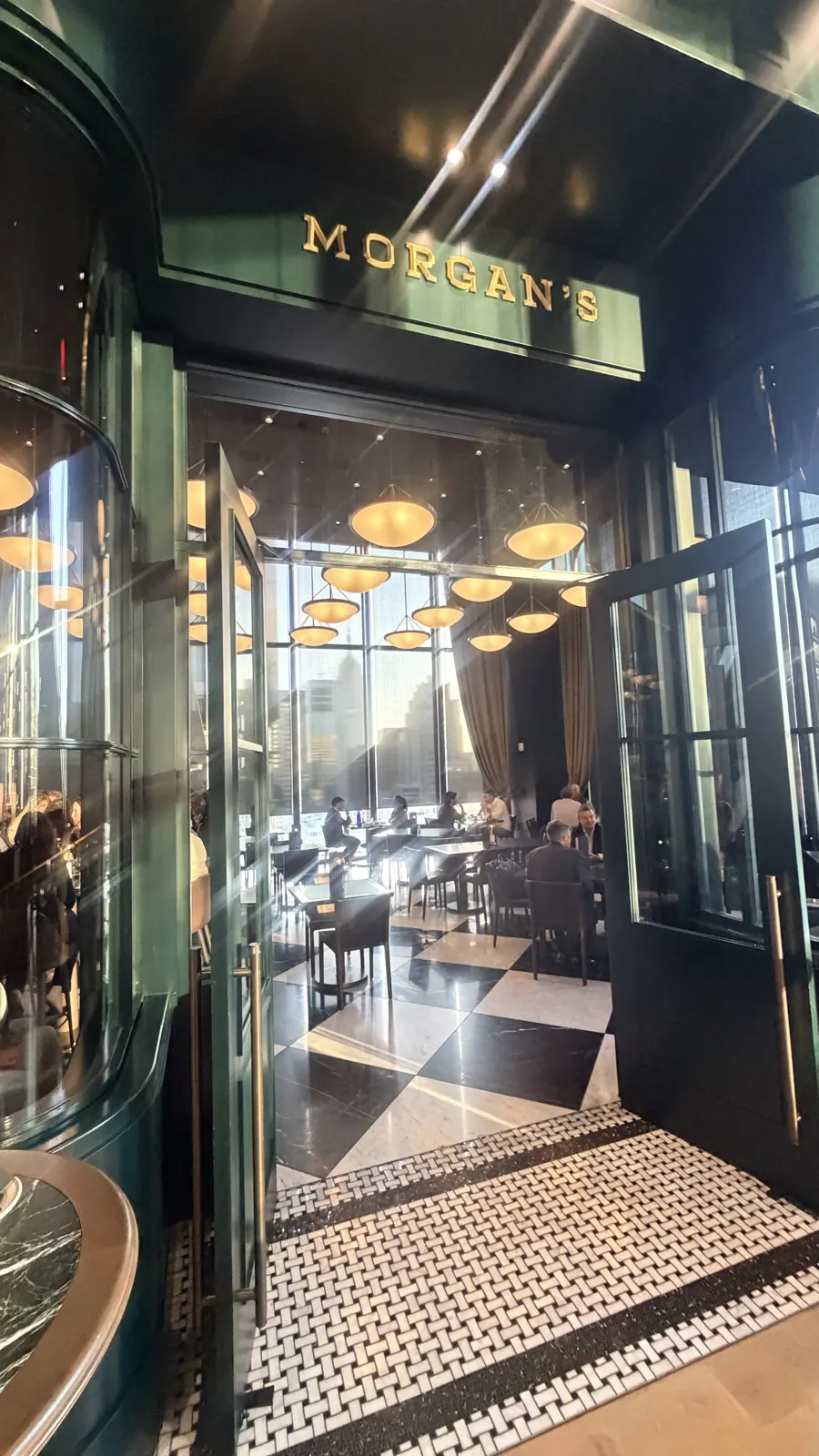
Inside 270 Park Avenue: Morgan’s, a Miniature Tower and a Different Kind of Workday
A look inside JPMorganChase’s Manhattan headquarters: Morgan’s, the dining spaces and a miniature tower, with photographs and silent films from our visit.

Paris · Art, Dining & Nightlife
Art by Day, Paris by Night: Where to Eat and Go Out During Paris Art Week
A five-day Paris dining and nightlife route for October 23–27, 2026, with Art Basel, Loulou, Caviar Kaspia, Manko and the late-night addresses to know.